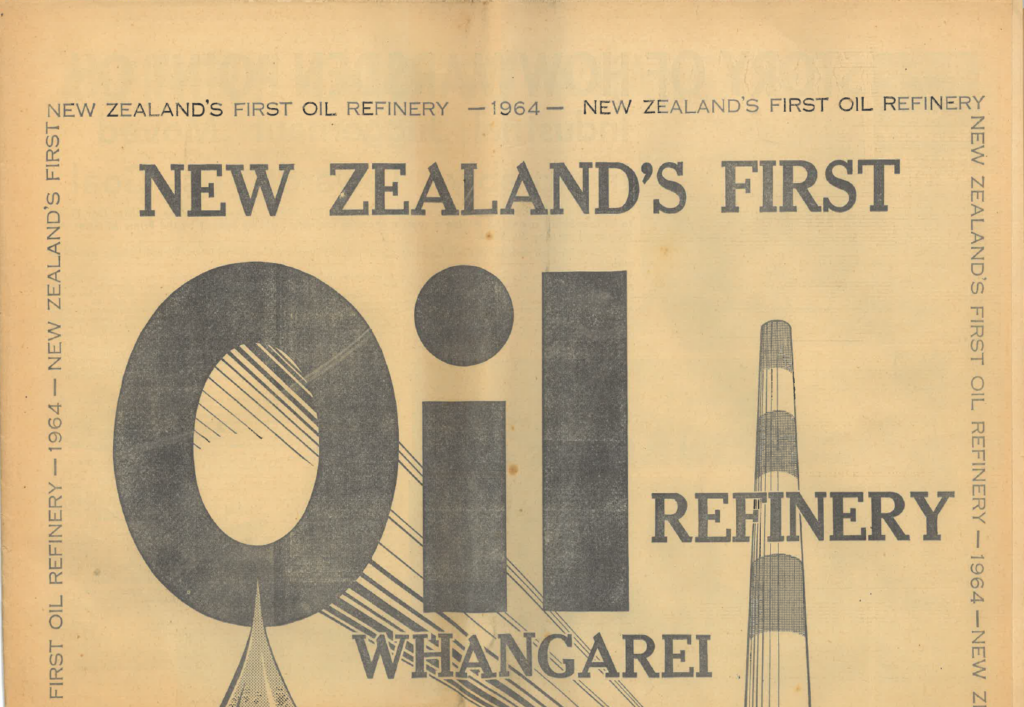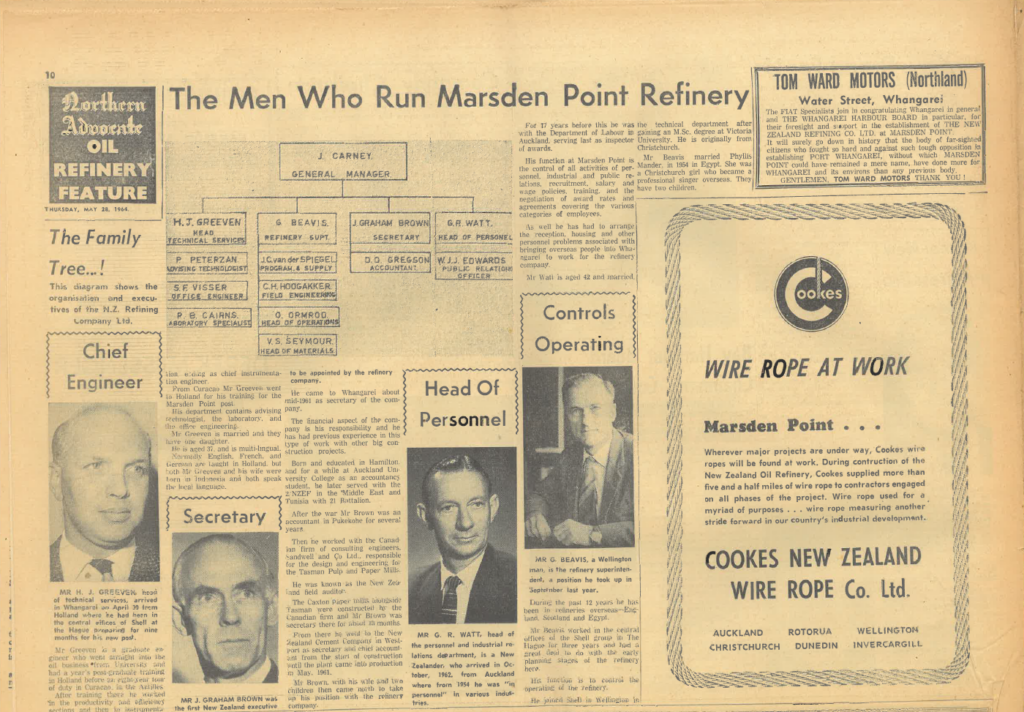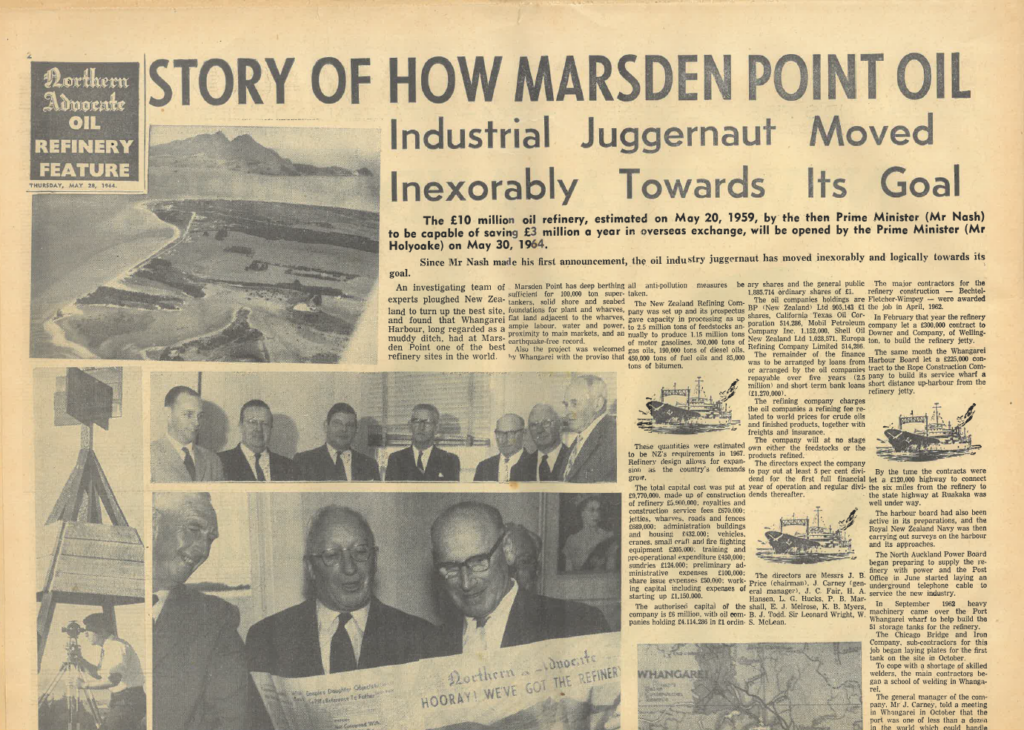
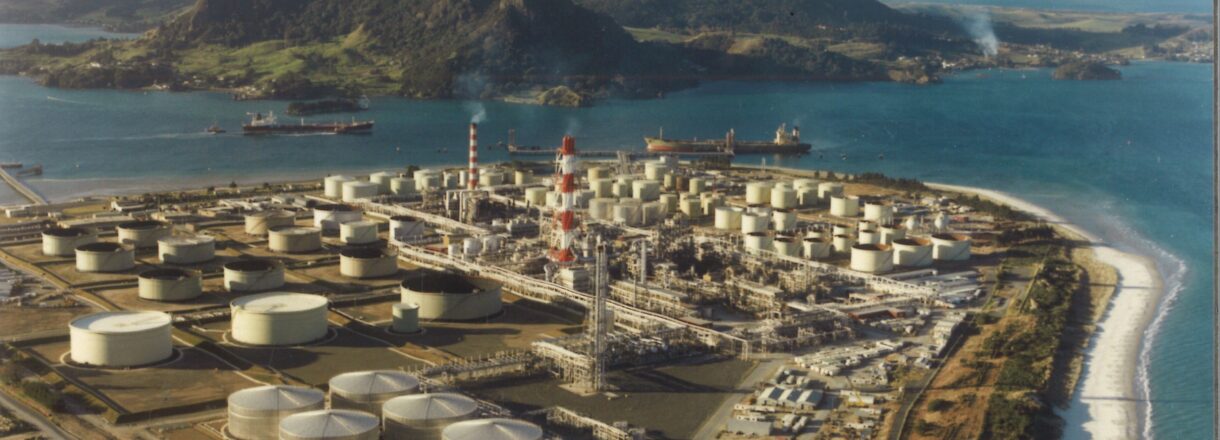
Announced on 20 May 1959 by the then Prime Minister, Walter Nash, the refinery was estimated to cost $10 million and was projected to save the country $3 million annually in overseas exchange. Officially opened on 30 May 1964 by Prime Minister Keith Holyoake, the facility was designed to strengthen national fuel security and support New Zealand’s growing economy. Marsden Point was selected for its exceptional natural and logistical advantages: deep-water berthing capable of accommodating 100,000-ton supertankers, stable shore and seabed conditions suitable for heavy industrial plant and wharves, a strong earthquake-free record, extensive flat land adjacent to the wharves, and proximity to the country’s main markets. These factors combined to make it one of the most favourable refinery sites in the world.
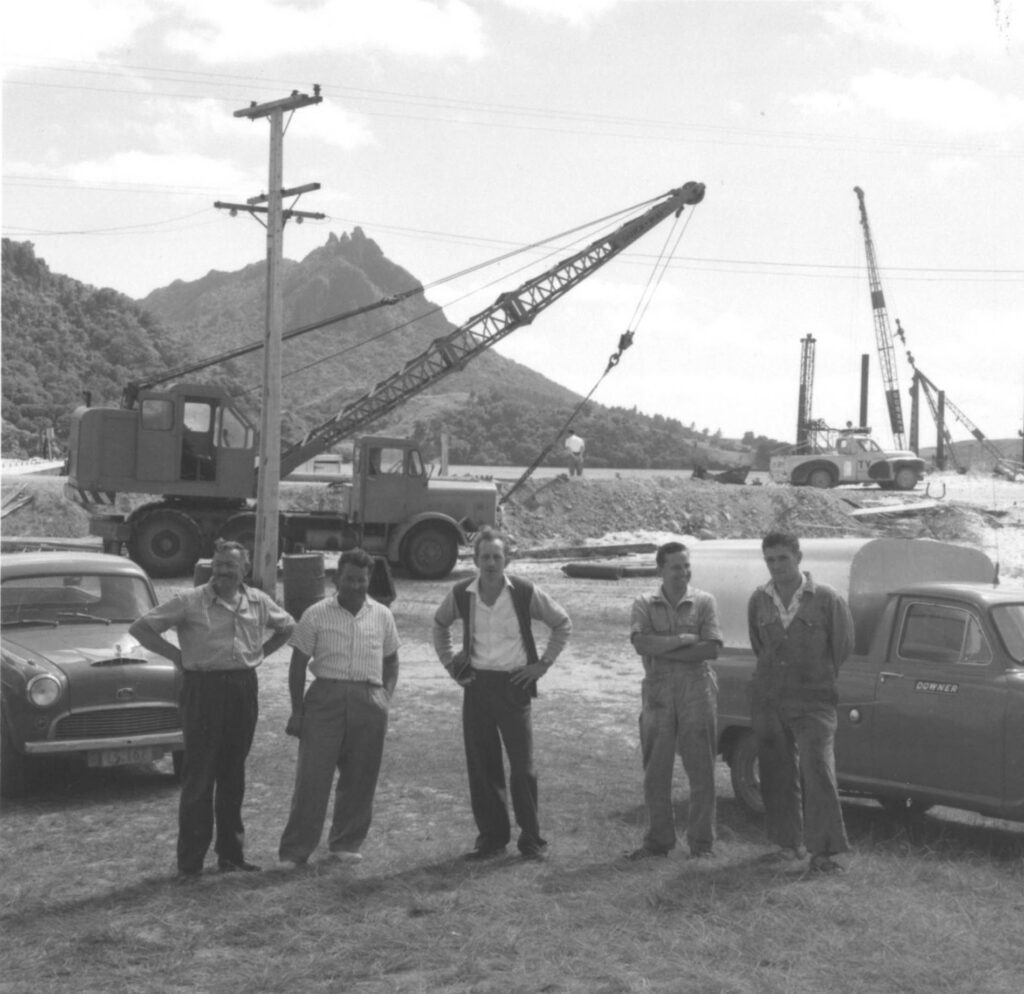
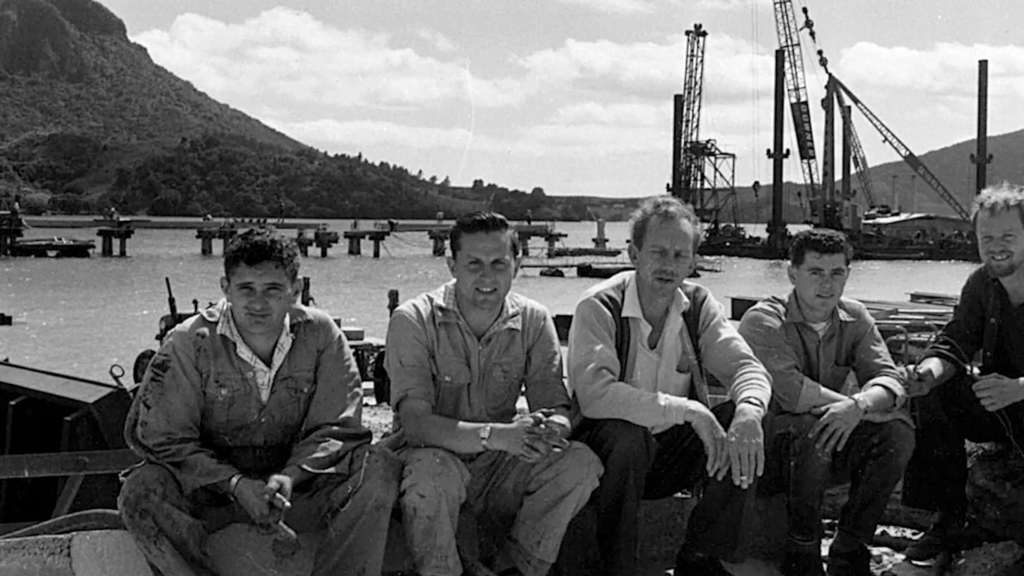
The New Zealand Refining Company was established with a prospectus outlining an annual processing capacity of 2.5 million tons of feedstock, producing approximately 1.15 million tons of motor gasoline, 300,000 tons of diesel oil, 450,000 tons of fuel oil, and 85,000 tons of bitumen. These volumes were forecast to meet national demand by 1967, with the refinery designed to allow for future expansion as energy needs increased. Construction of the original refinery, undertaken between 1962 and 1964 under the overall direction of Bechtel, required an estimated 300,000 man-days over a 20-month programme, with a peak workforce of around 700 people, including contractors and sub-contractors.
McKay’s involvement began during this initial construction phase. As work commenced, the head contractor experienced a shortage of qualified electricians and approached Joe McKay for assistance. Joe agreed to support the project by supplying 12 electricians, an engagement that not only contributed to the successful delivery of the refinery but also marked the beginning of a long-standing working relationship between McKay and the Marsden Point Oil Refinery. As a direct result of this commitment, McKay’s staff numbers grew from 20 to 50, reflecting the scale and importance of the work undertaken.
The refinery demanded extensive and highly complex electrical work, all critical to the safe and efficient operation of a major industrial processing facility. McKay’s contribution encompassed the establishment of robust power supply and distribution systems, including high-capacity connections to the national grid, substations, switchyards, and switchrooms capable of supporting continuous heavy loads. Electrical installations were completed across the process plant to power crude distillation units, pumps, heat exchangers, vessels, and furnaces. McKay’s later involvement extended to major expansion work in the 1980s, including the hydrocracker and hydrogen manufacturing units.
A substantial portion of the work focused on instrumentation and control systems, enabling the precise monitoring and automation of complex and hazardous refining processes. All installations within process areas were required to comply with stringent New Zealand electrical codes and hazardous-area safety standards to mitigate the risk of ignition in environments containing flammable gases and liquids. The site also incorporated on-site electricity generation facilities to ensure continuity of supply, recognising the critical importance of uninterrupted power to both refinery operations and national energy security. In addition, McKay delivered electrical services for supporting infrastructure, including lighting, fire protection systems, administrative buildings, and the power supply for the pipeline transporting refined products to Auckland.
The first tanker to discharge crude oil at Marsden Point berthed on 23 February, under the supervision of the board’s Deputy Harbour Superintendent, Captain E S Ross, and pumped 50,000 tons ashore. Upon completion of the tank-building subcontract, the refinery achieved a total storage capacity of 110 million gallons, cementing its role as a cornerstone of New Zealand’s fuel supply.
For McKay, Marsden Point represents not only a landmark project in scale and technical complexity but also the foundation of a trusted, collaborative relationship that has continued to evolve alongside the refinery itself, supporting its operation and expansion for more than 50 years.