THE 1960s
The 1960s saw McKay expand as New Zealand itself was modernising. Industrial projects and rising demand for electricity drove the business forward, while the construction of a purpose-built Water Street headquarters established a base that would support McKay’s growth for decades to come.
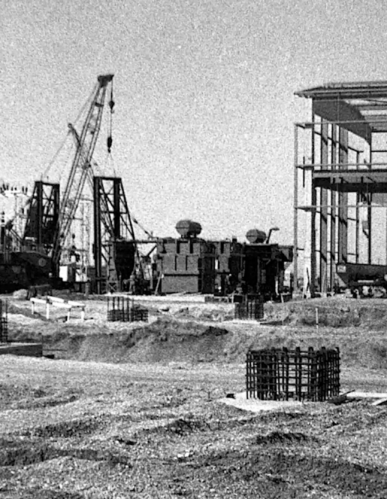
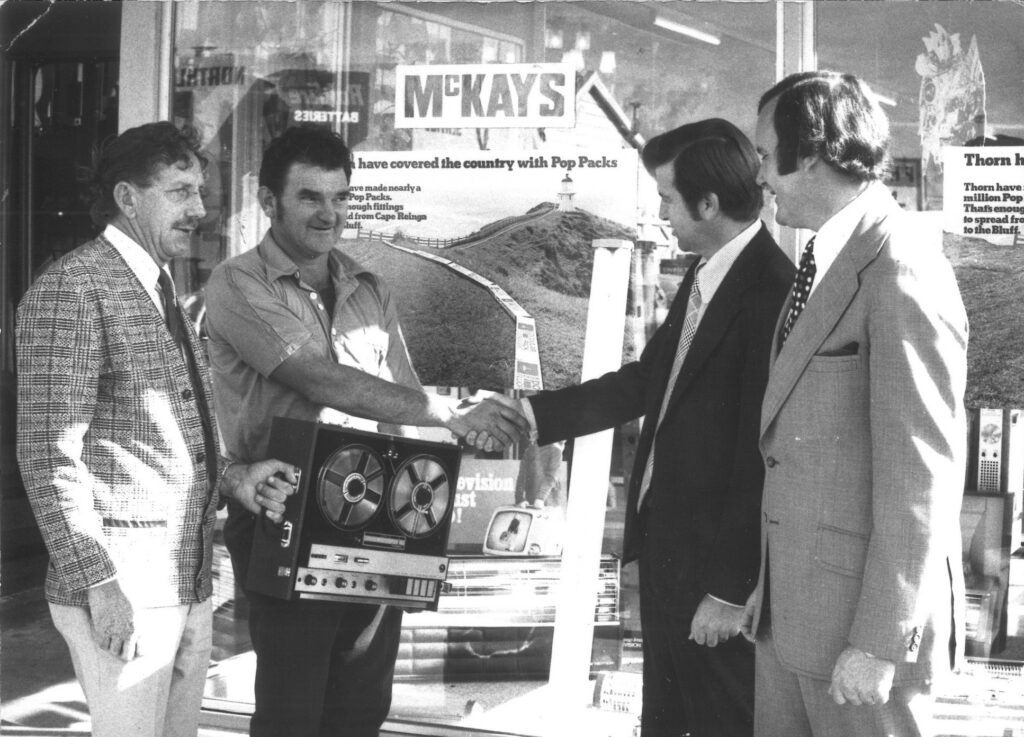
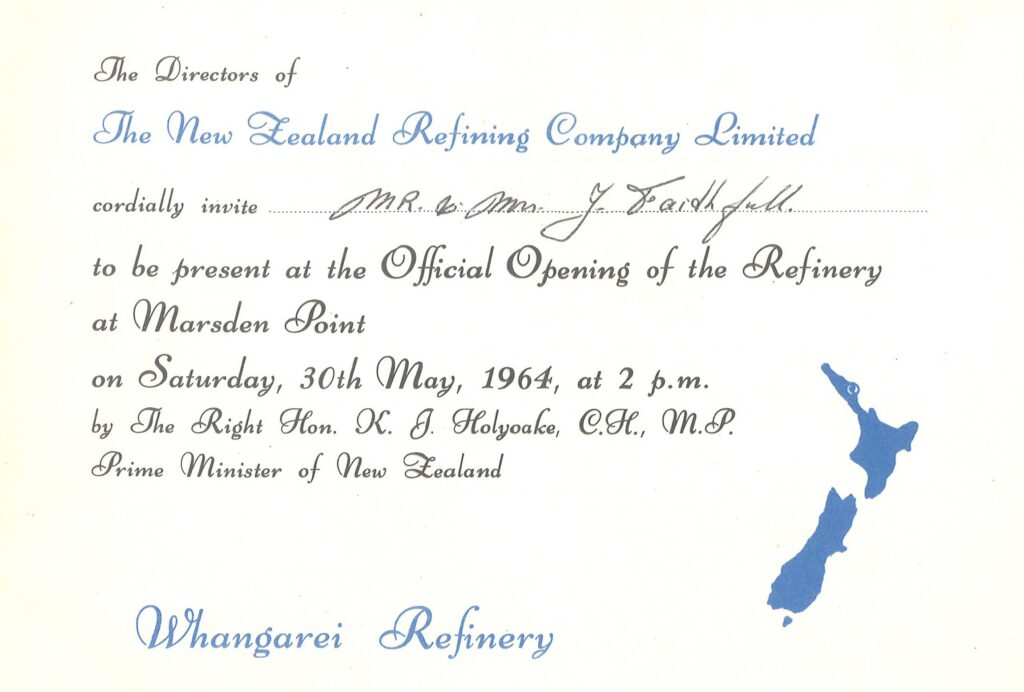
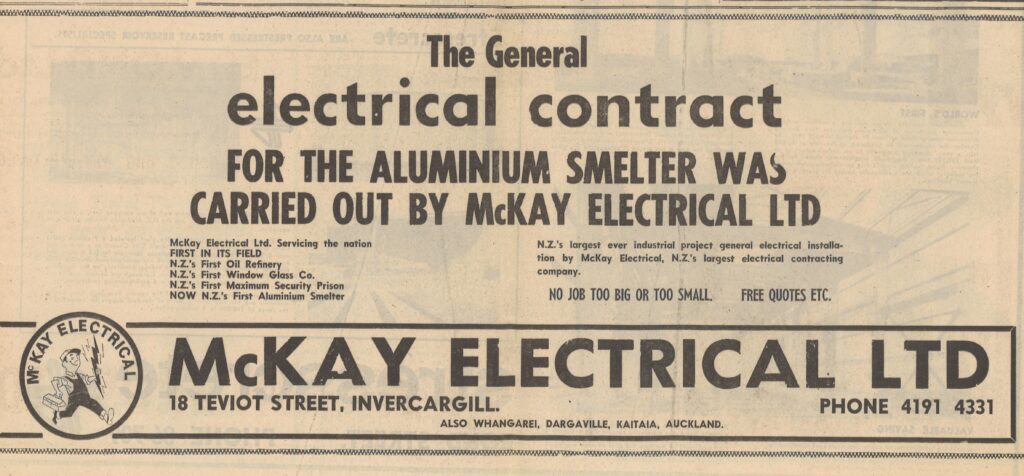
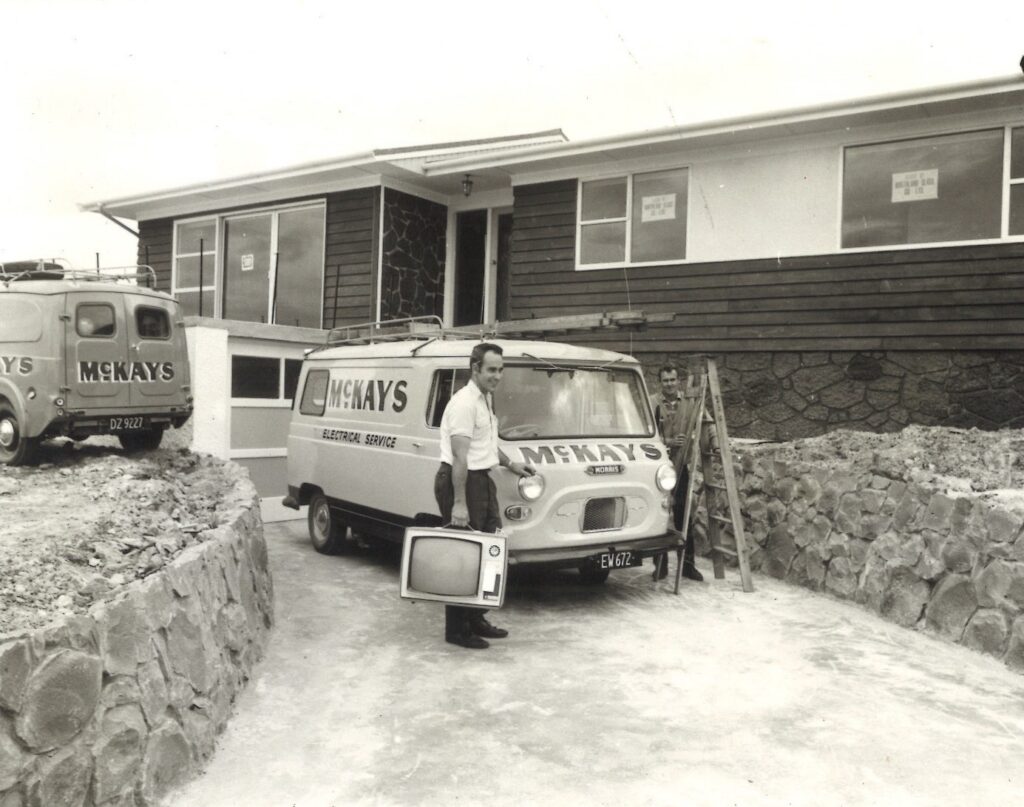
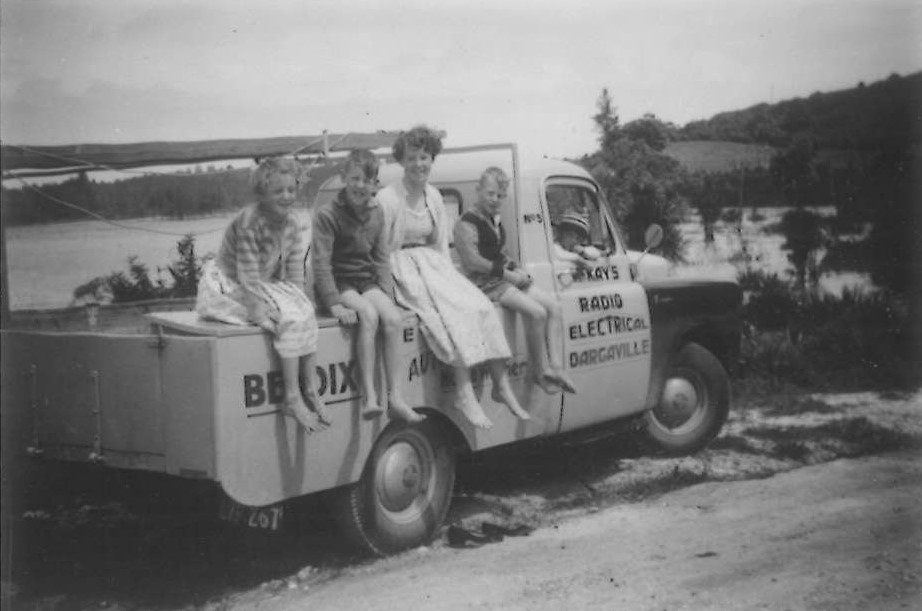
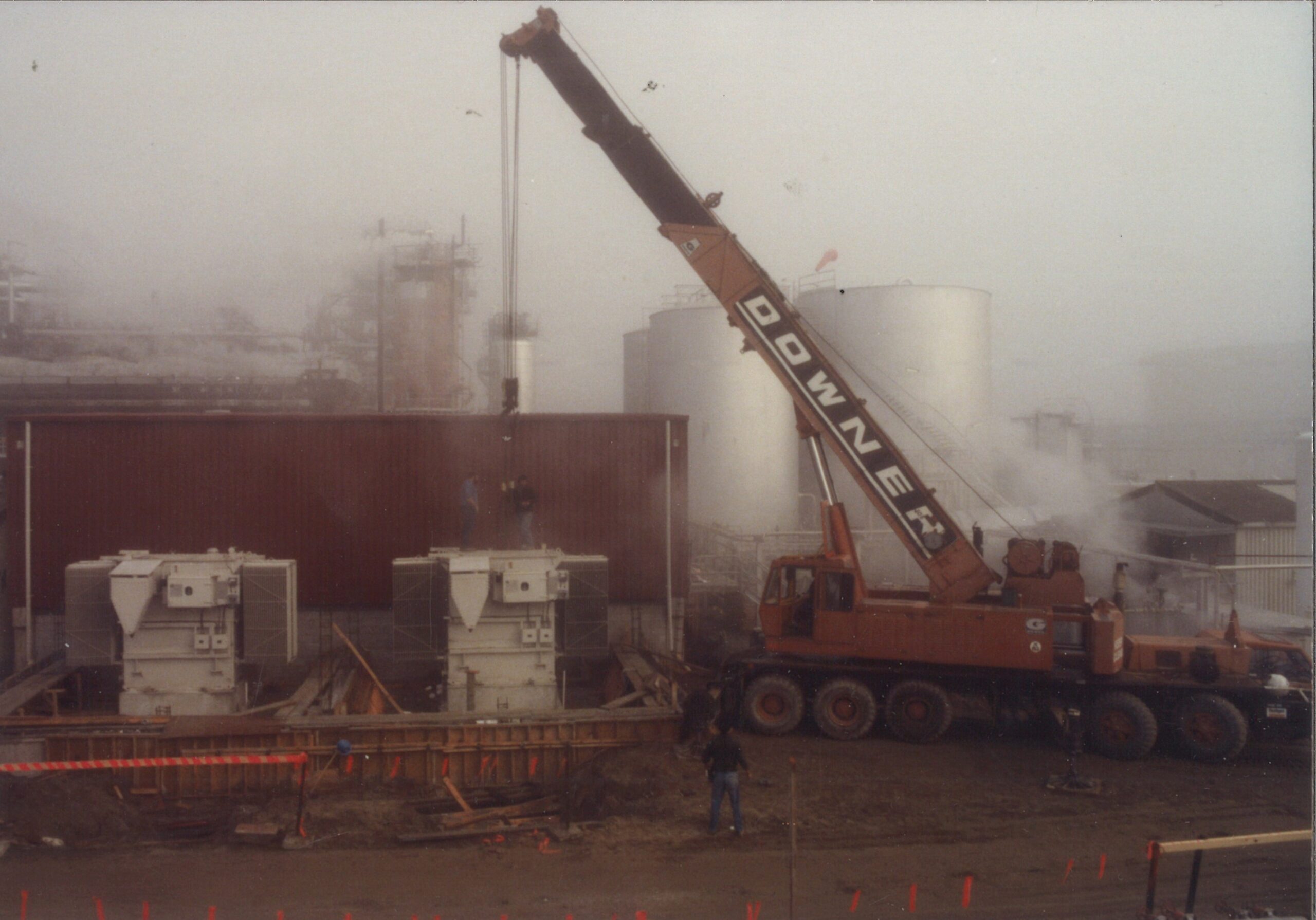
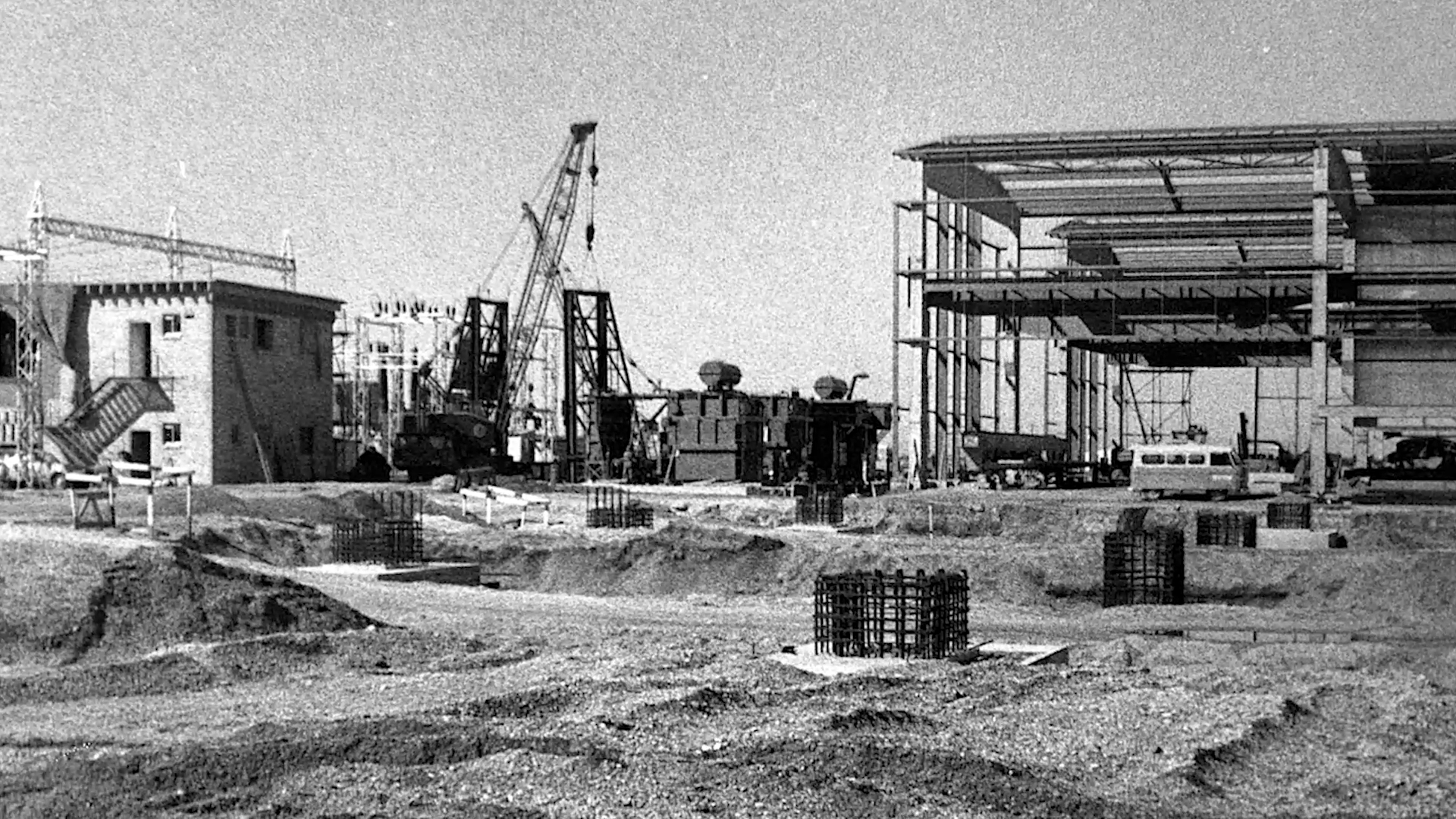
The 1960s were a decade of growth and transformation for McKay, alongside a rapidly changing New Zealand. The introduction of black-and-white television in 1961 drove a surge in electricity use, boosting demand for electrical goods and supporting McKay’s retail growth in Dargaville. Industrial expansion also created major opportunities: the Marsden Point Oil Refinery in 1962 and the Tīwai Point Aluminium Smelter in the mid-1960s marked McKay’s first major heavy industrial projects, growing the workforce from 20 to more than 100 and establishing enduring industry relationships.
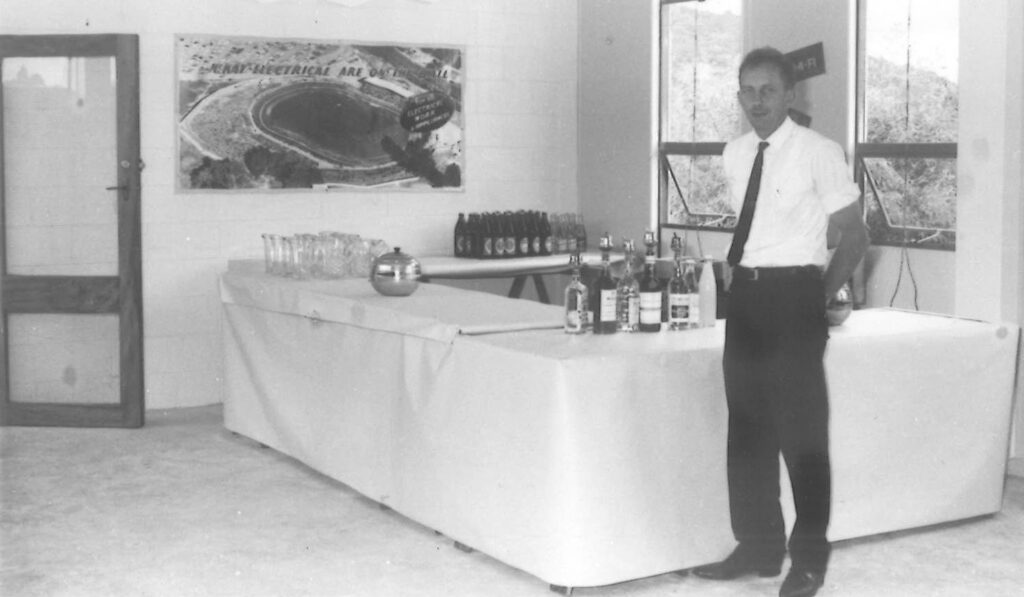
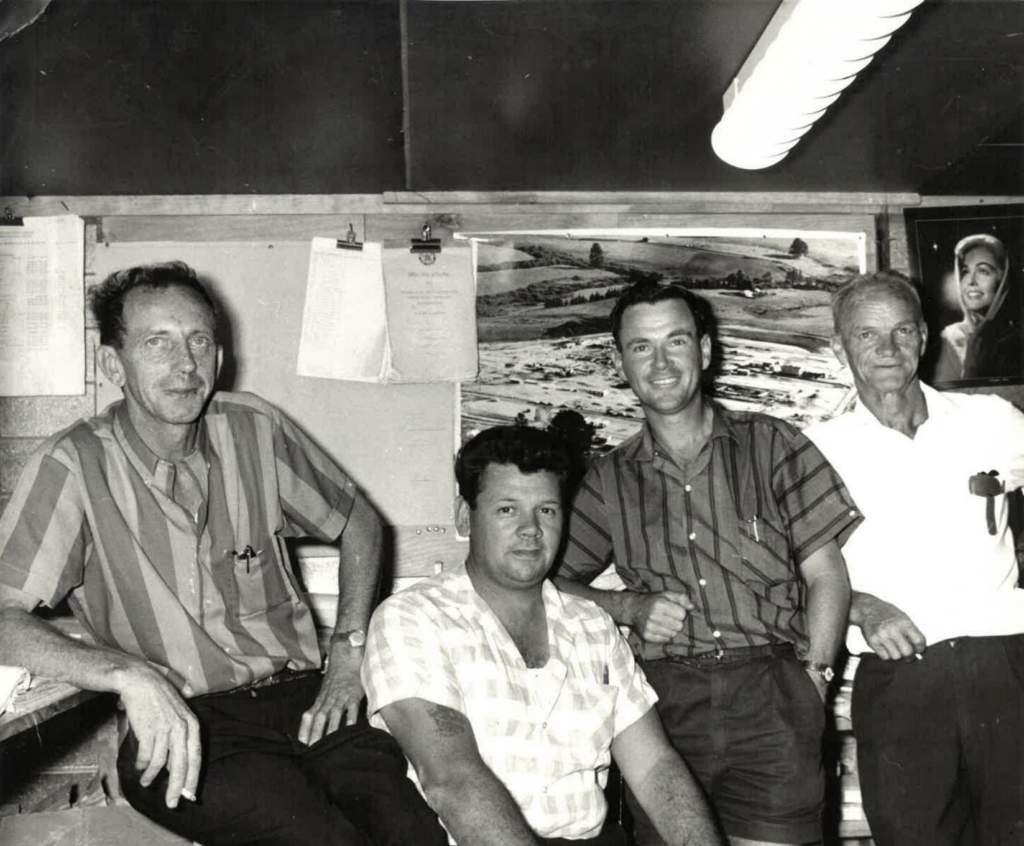
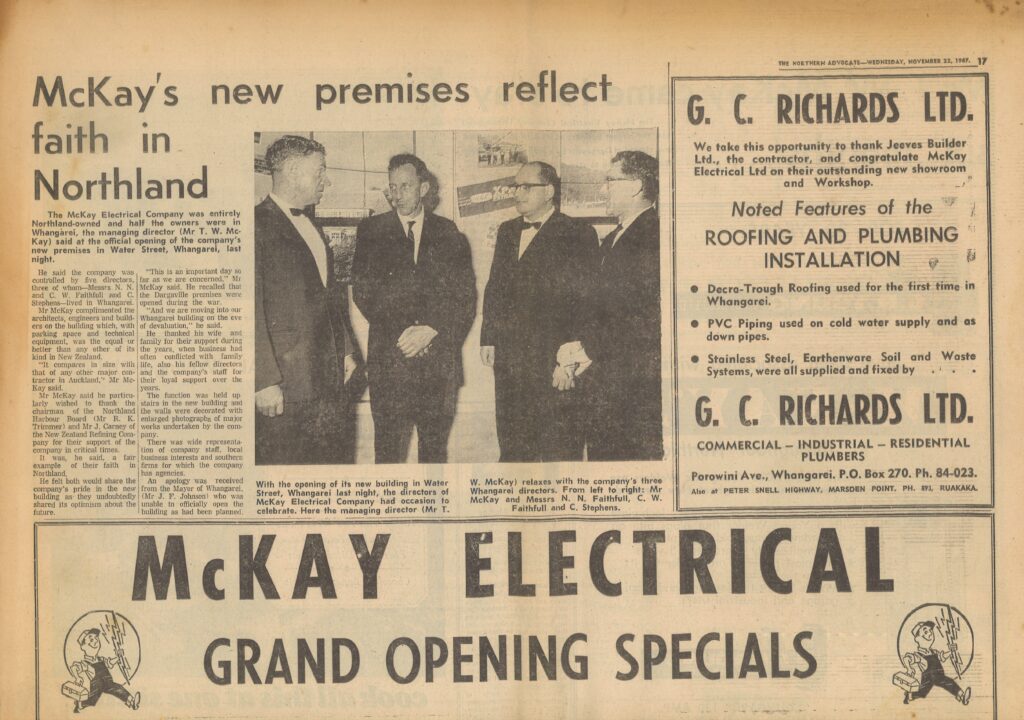
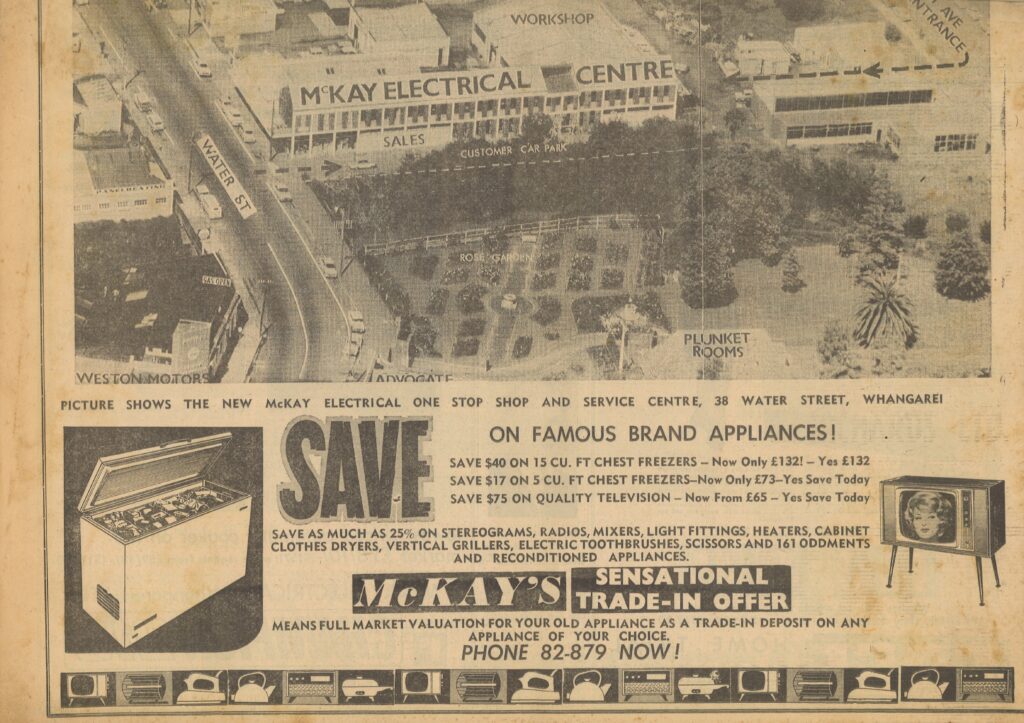
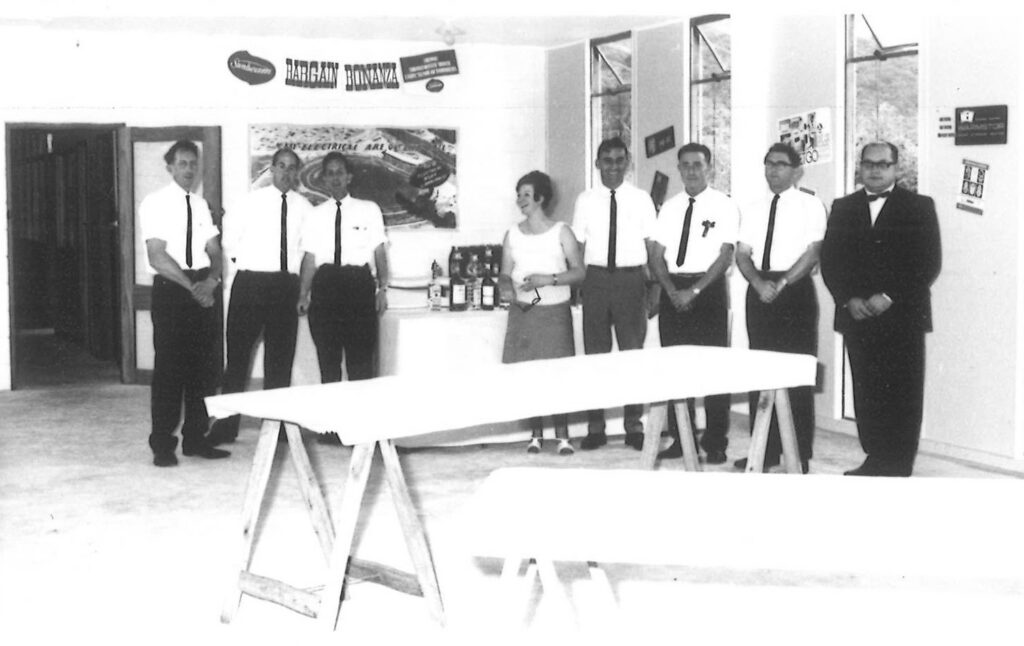
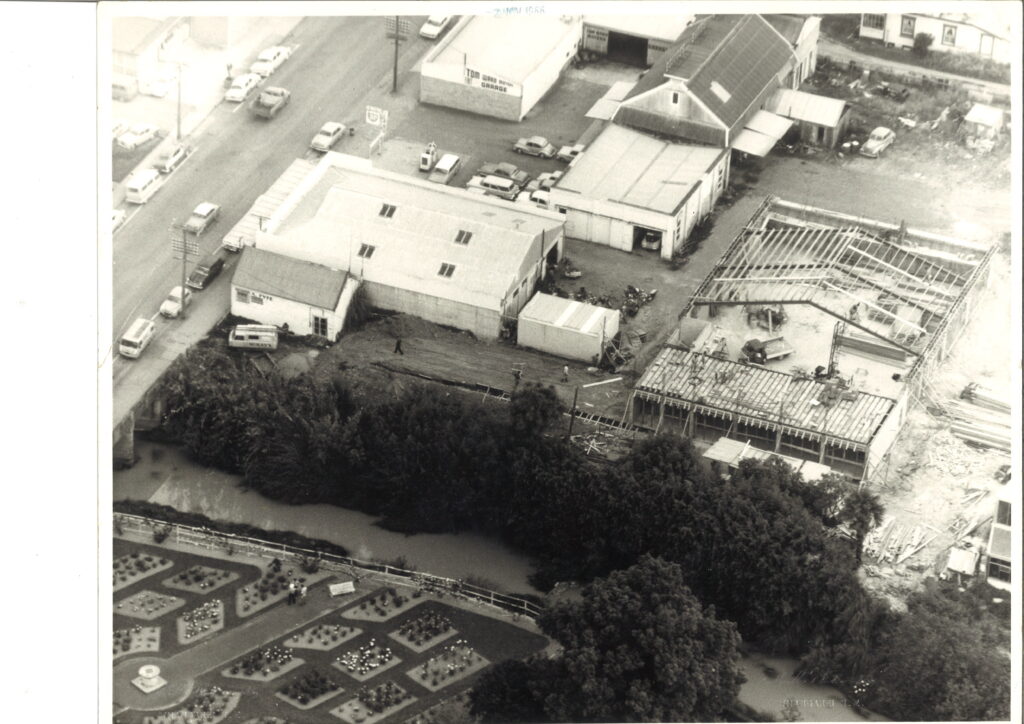
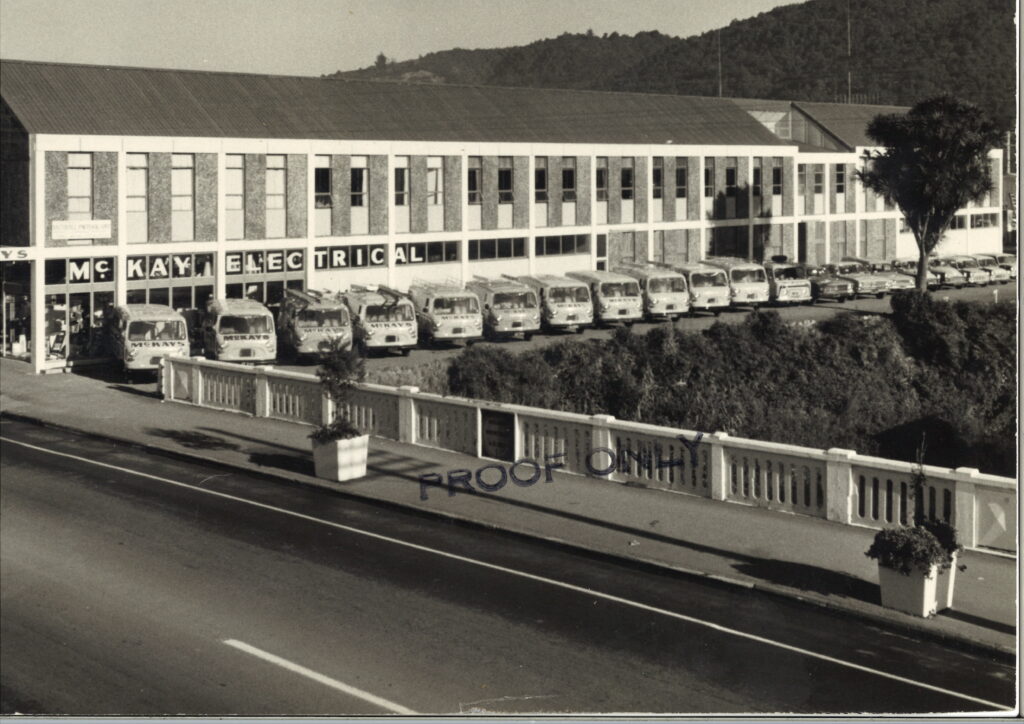
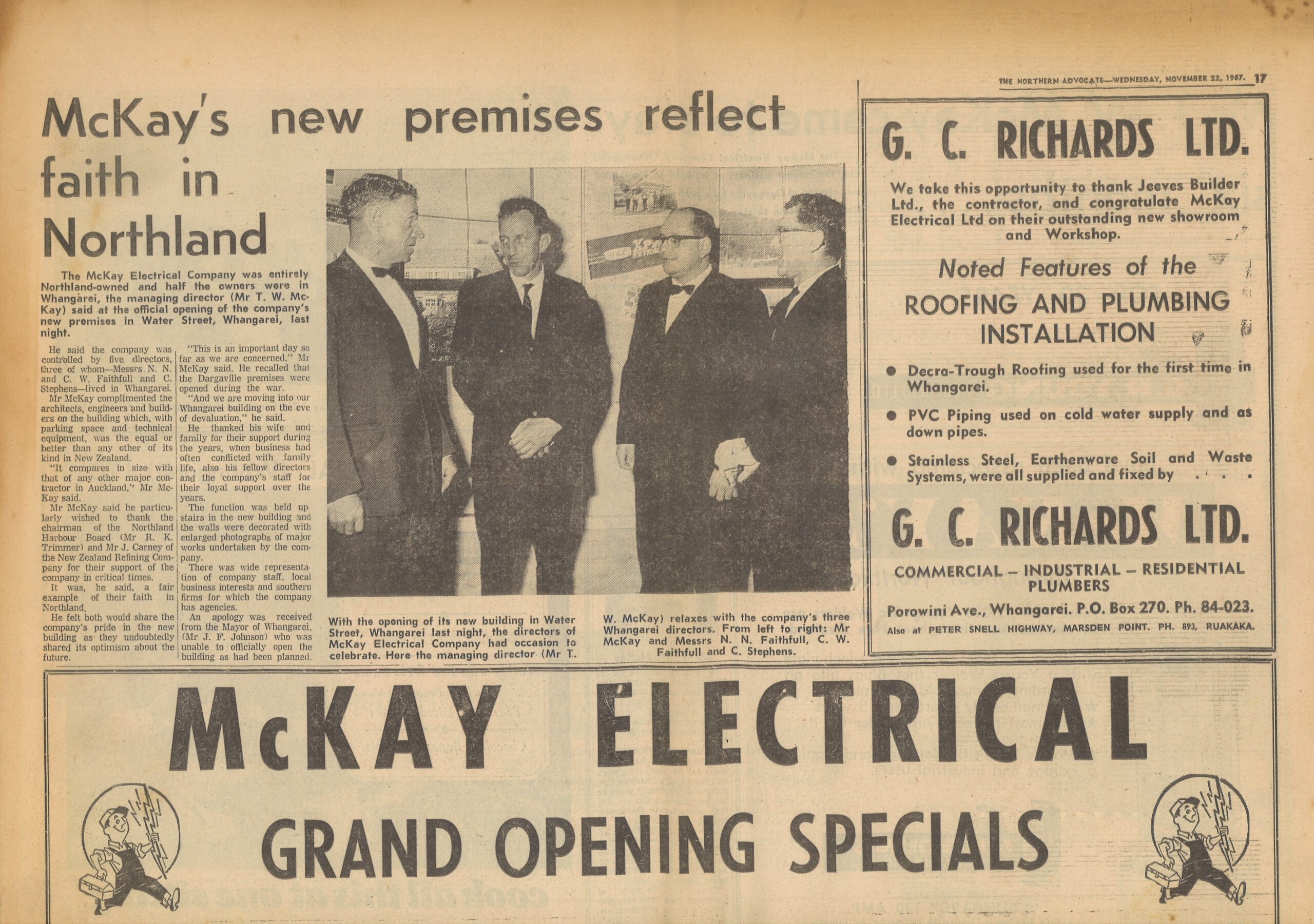
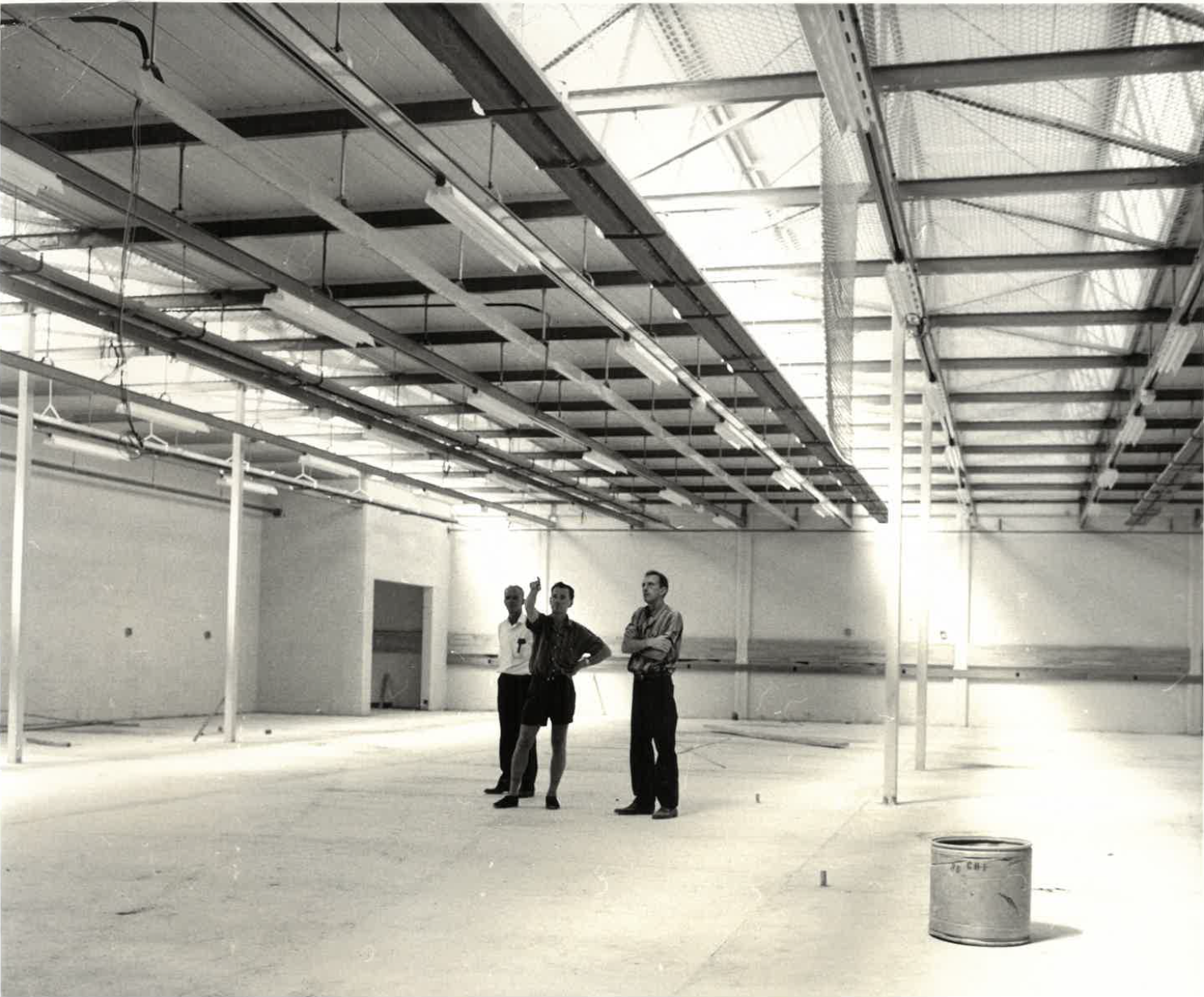
By 1966, managing operations across three Whangārei locations had become increasingly difficult, prompting shareholders Tom McKay, Joe Faithfull, and Colin Stephens to consolidate the business premises into a purpose-built building in Water Street, taking over the old gas works site. Completed by Jeeves Builders, the building was one of the largest and most modern in the region, with facilities comparable to those of leading Auckland contractors. Its size and design reflected both the company’s ambition and the wider wave of construction in Whangārei during the 1960s, driven by industrial growth and infrastructure projects such as the Marsden Point refinery and the HVDC transmission line from Benmore. The new premises allowed McKay to coordinate large-scale industrial projects more effectively while continuing to expand its retail operations, setting the company on a path to becoming a leading provider of complex electrical services in a modernising New Zealand.
KEY LEADERSHIP OF THE DECADE
Tom McKay
- Role:
- Director
- Start:
- 1936
- End:
- 1982
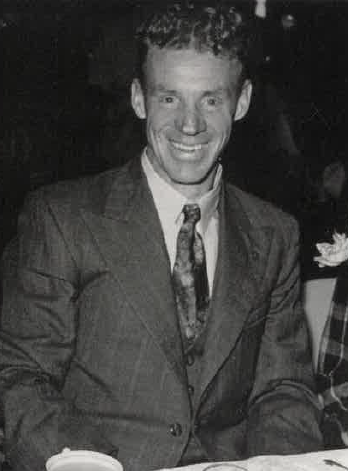
Tom McKay was the founder of McKay Limited, a pioneering entrepreneur whose resilience, leadership, and vision built the foundations of one of the most enduring electrical contracting businesses in Aotearoa, New Zealand.
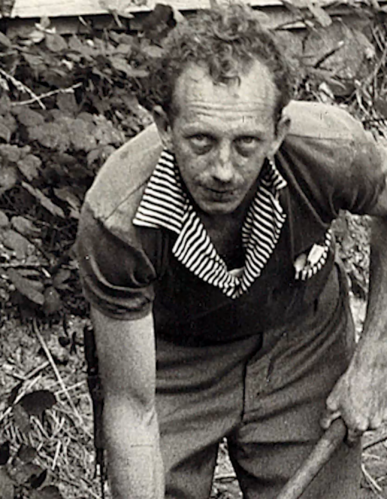
Joe Faithfull
- Role:
- Director
- Starting role:
- Apprentice
- Start date:
- 1944
- End date:
- 2015
Joe Faithfull was the driving force behind McKay’s growth into a national and international electrical powerhouse – a visionary leader whose innovation, work ethic, and belief in people transformed a small Northland business into one of the largest privately owned electrical companies in Aotearoa, New Zealand.
KEY PROJECTS OF THE DECADE
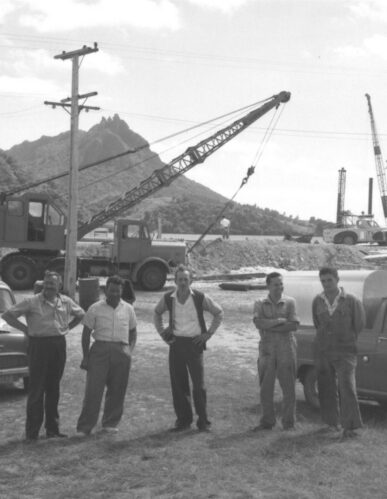
The MARSDEN POINT OIL REFINERY CONSTRUCTION
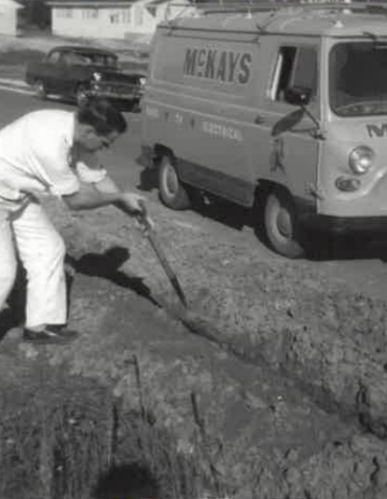
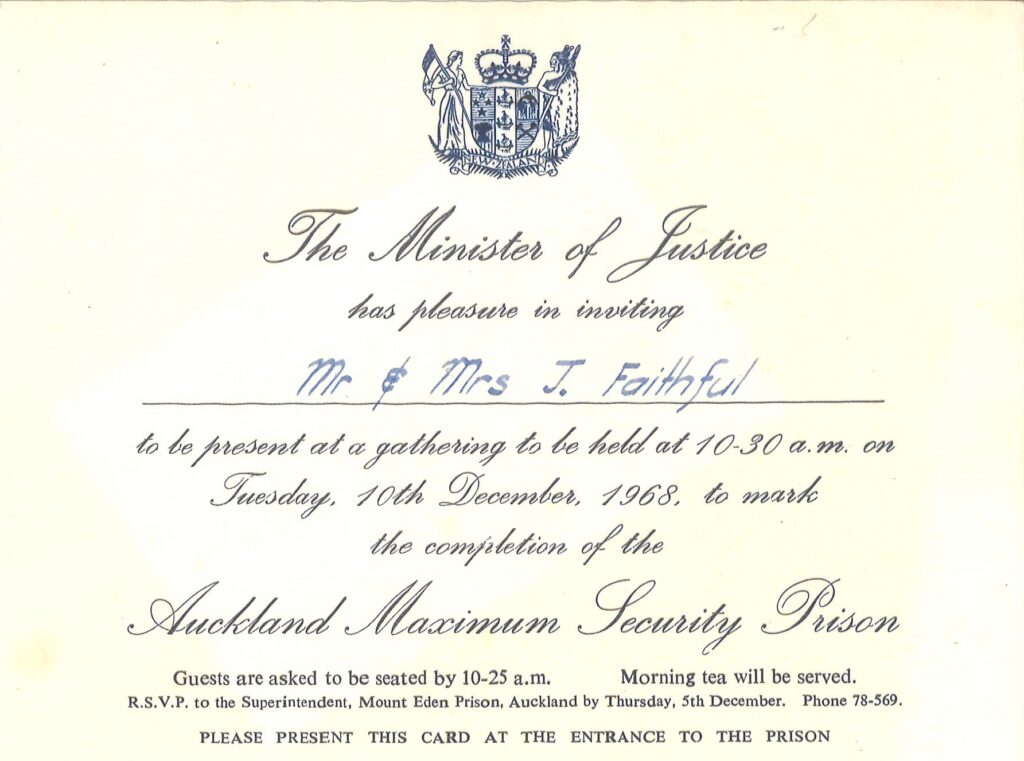
Pāremoremo High Security Prison (Auckland Prison)