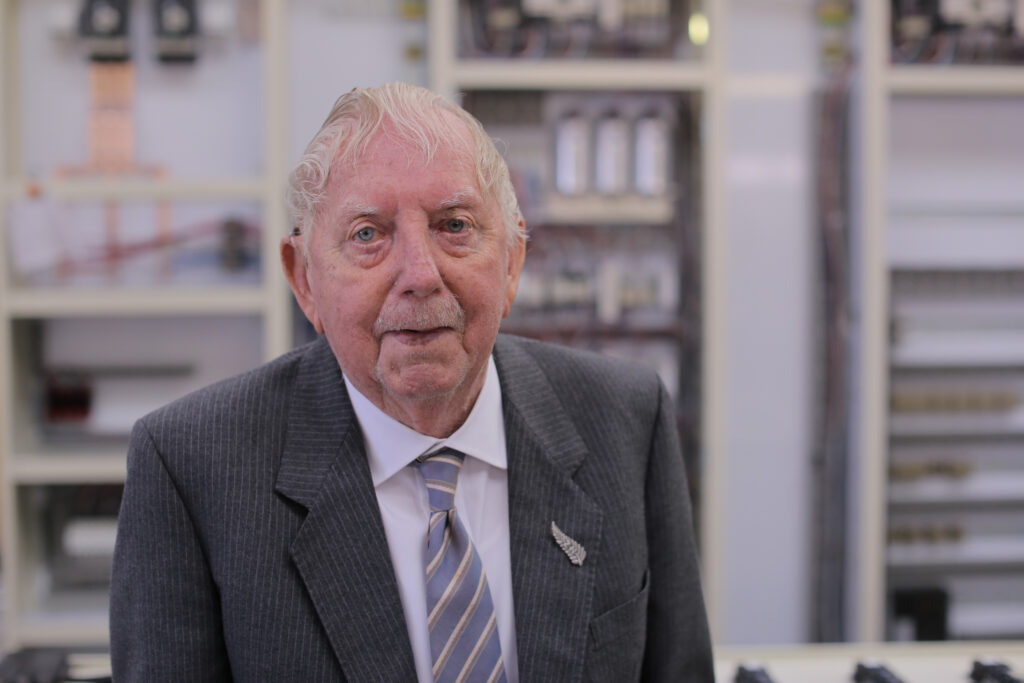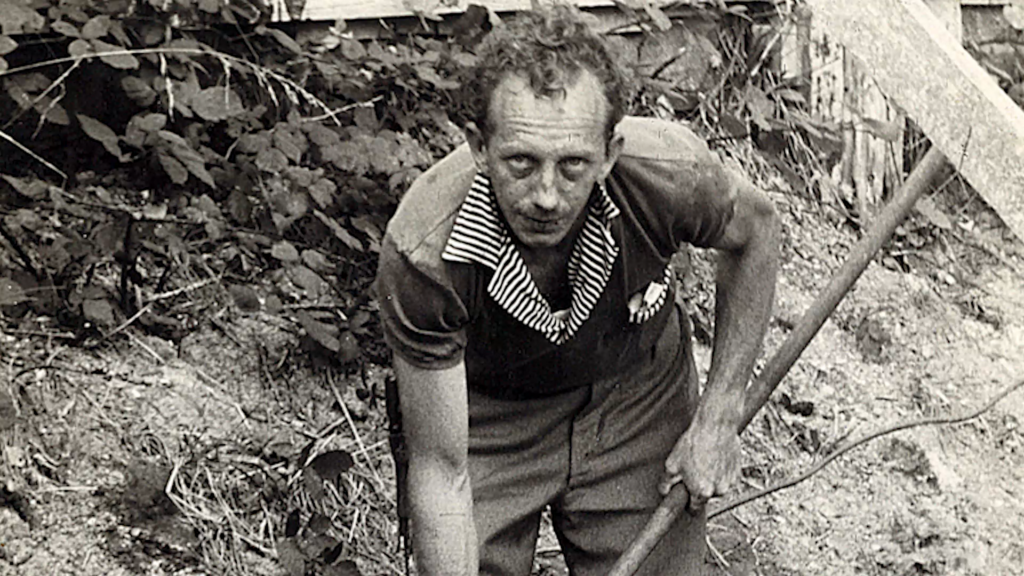
Joe Faithfull was born in 1928 in Northland, New Zealand, and from an early age showed a natural curiosity about how things worked. Growing up at a time when electricity was still a novelty in many rural communities, Joe was fascinated by radios, machinery, and the promise of new technology. As a schoolboy, he earned small amounts of money lighting boilers and doing odd jobs, quickly realising that practical skills could open doors. He often joked that his first real ‘business model’ was being paid three shillings to light the school boiler, while a milkshake and a movie ticket cost only one.
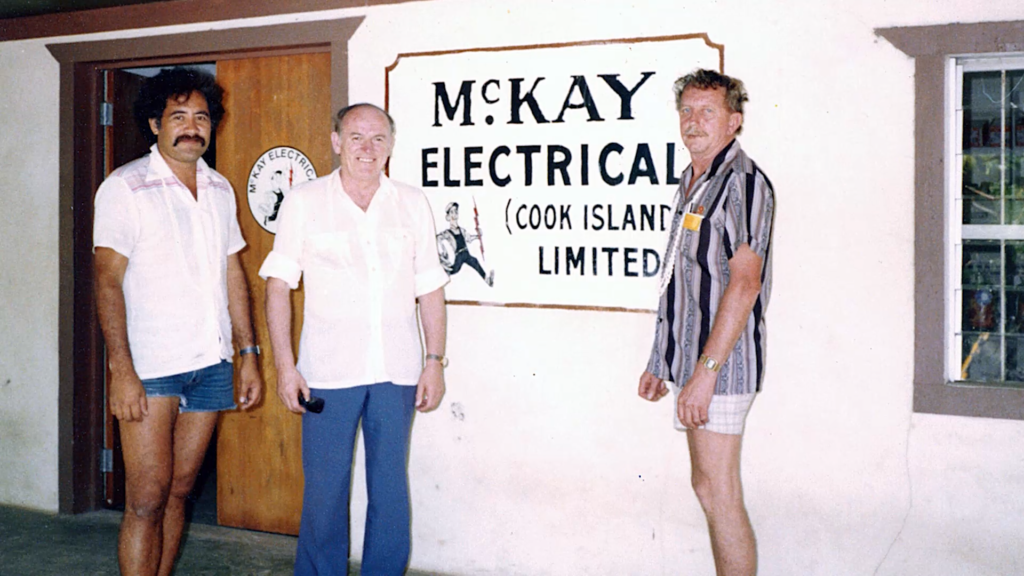
In January 1944, at just 14 years old, Joe walked into McKay’s Electrical in Dargaville and asked for a job. The foreman turned him away for being underage, but Joe simply replied that he would be back the following week – on his birthday. True to his word, he returned, and this time he was taken on. His first tasks were hardly glamorous: dusting radios, repairing kettles, and assembling basic appliances. But Joe absorbed everything around him, and within a few years he had begun a formal electrical apprenticeship. He qualified in 1947 and, just six months later, was promoted to foreman at the age of 19.
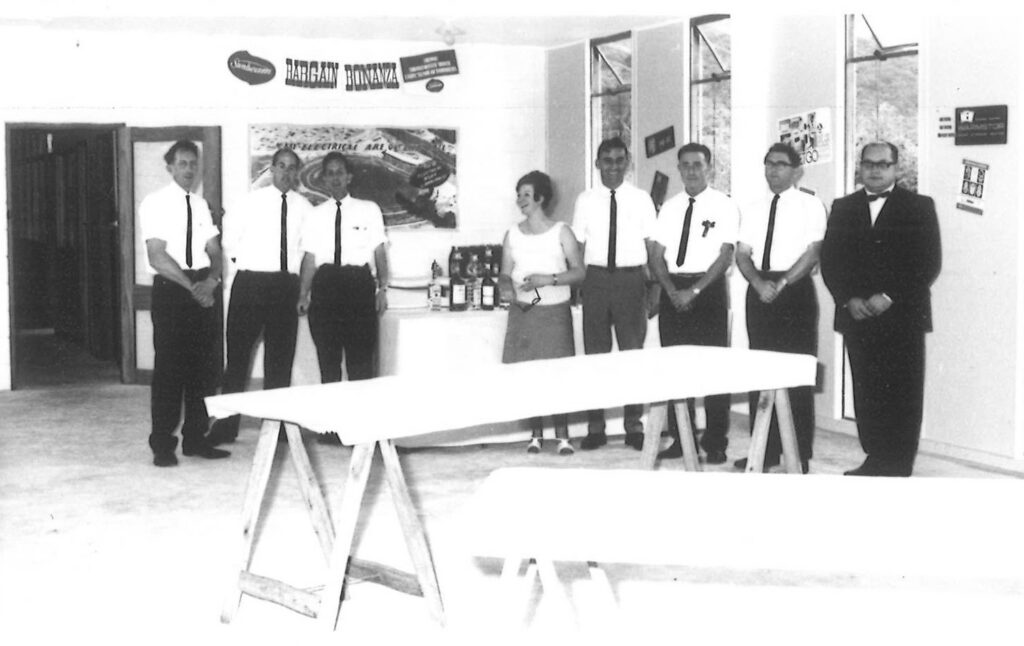
This placed Joe in the unusual position of managing returned Second World War servicemen, many of whom were older and more experienced in life but new to the industry. Joe later reflected that the combination worked well: they brought ideas from overseas, while he brought the technical knowledge and drive. Together, they formed a tight-knit team that laid the foundations for McKay’s post-war expansion. By this time, Joe had been promoted to partner.
Joe’s rise within McKay was rapid. In just five years, he went from Apprentice to Partner. He had an instinctive sense for opportunity and a belief in technology as a force for progress. As New Zealand emerged from the war, Joe was at the forefront of bringing electricity to rural Northland. He worked on contracts that connected more than 200 homes across the East Coast and Far North, transforming daily life for farmers and families alike. He often recalled people standing outside at night simply to watch the lights glowing inside newly electrified homes.
Joe also had a knack for thinking ahead. While many homeowners wanted just one power point in a hallway, Joe would insist that they would soon need more – in kitchens for fridges or in living rooms for radios and televisions. He had been inspired as a boy by science fiction films such as Flash Gordon, and while space travel remained a fantasy, he believed electricity would shape the future in very real ways.
In 1950, Joe travelled to Australia and worked briefly in Sydney, including a memorable stint as a ‘security guard’ on the back of his cousin’s vegetable truck, armed with nothing more than a club. Around five years later, at the request of Tom McKay, he returned to Dargaville after McKay was offered a major power contract that would see the company connect hundreds of homes. Rather than simply accepting a share of the profits he was offered, Joe negotiated part ownership of the company, cementing his long-term commitment to McKay.
Around this time, Joe married Jackie McKay, the niece of founder Tom McKay. He had, by his own admission, “chased her for years”. Jackie was unimpressed at first by the young electrician who always seemed to be around, but Joe was persistent, charming, and quietly ambitious. Eventually, in 1955, Jackie agreed to marry him. Joe liked to joke that it was the best deal of his life; he not only married the woman he loved but also became part of the McKay family.
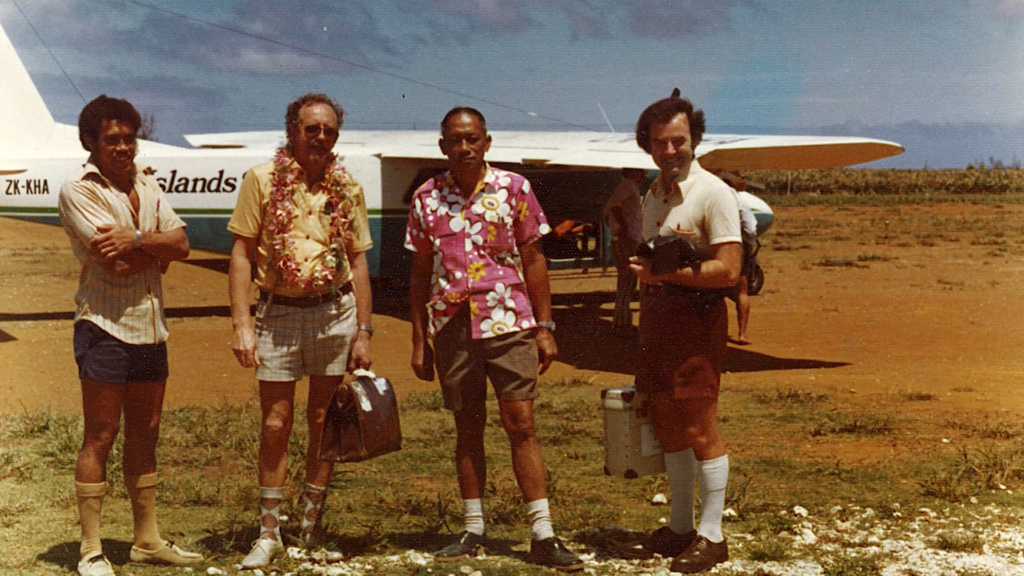
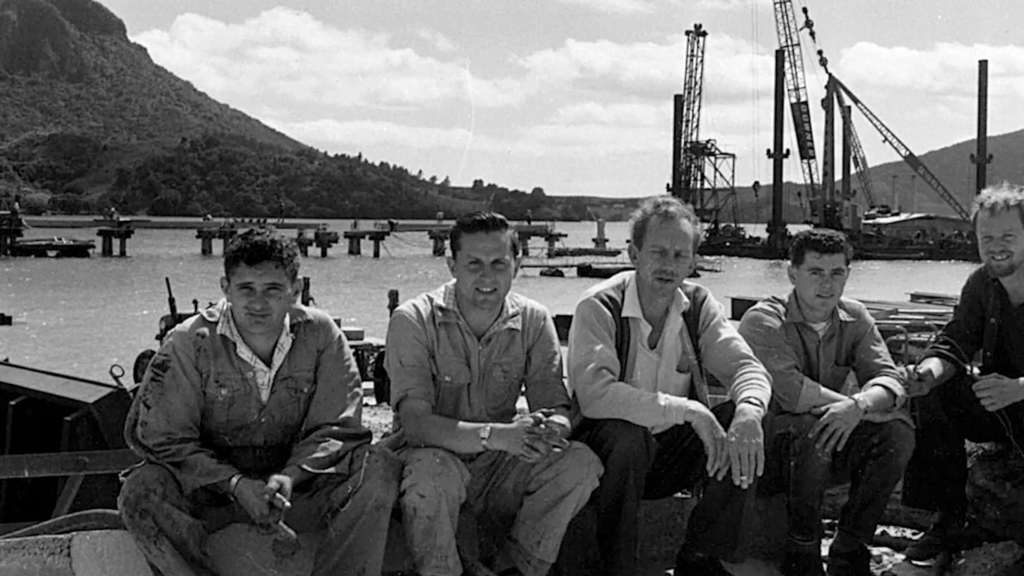
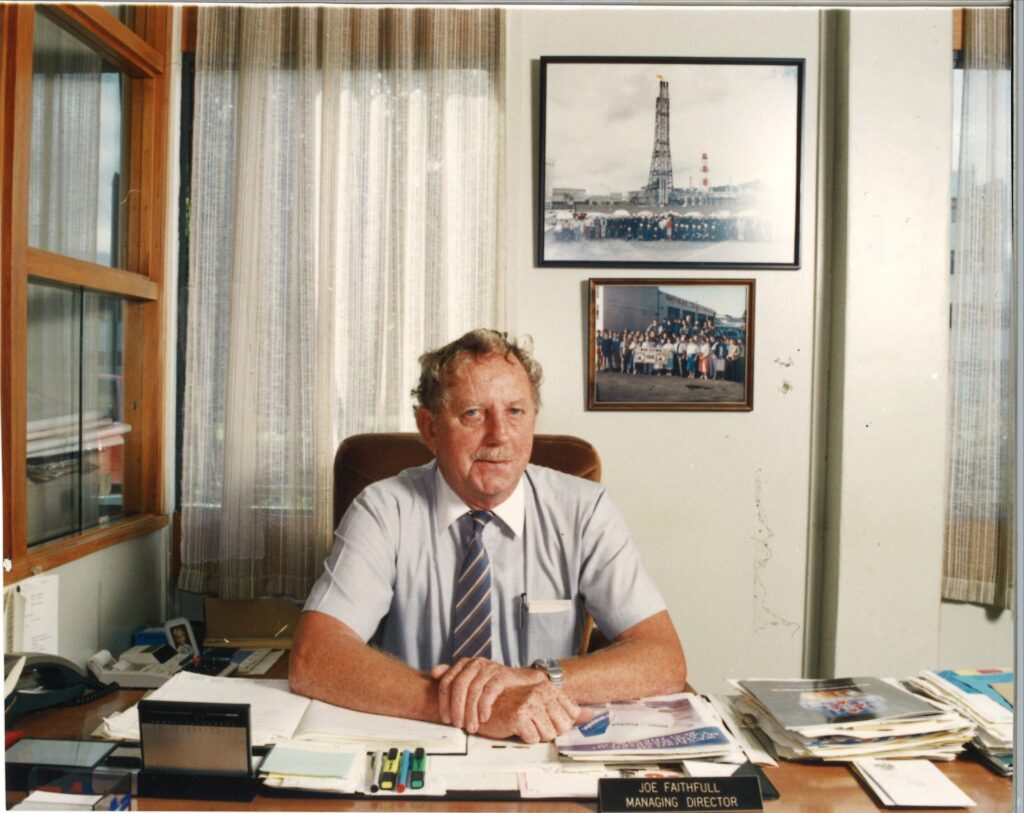
Over the following decades, Joe led the business into increasingly complex and ambitious projects. Under his direction, McKay worked on some of New Zealand’s most significant industrial developments, including the Tīwai Point Aluminium Smelter, the Marsden Point Oil Refinery, Rarotonga International Airport, defence force facilities, maximum-security prisons, and major marine projects. By the early 1980s, Joe had bought out the remaining shares in McKay Electrical Whangārei, becoming the sole owner.
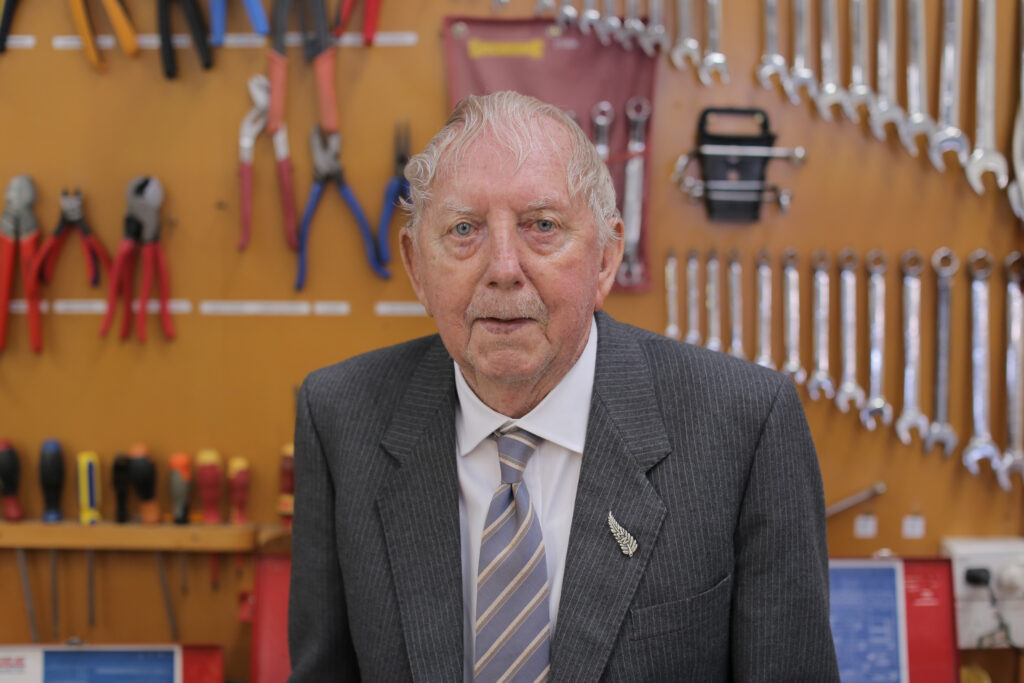
Despite the scale of his success, Joe remained deeply practical and people focused. He continued to come into the office each day, even into his 80s, and took particular pride in training apprentices. Over his career, he personally trained more than 500 young electricians, believing strongly that education and opportunity were the foundations of long-term success. This philosophy was later formalised through the Joe Faithfull Scholarship Programme, established in 2014 to support employees and their families in furthering their education.
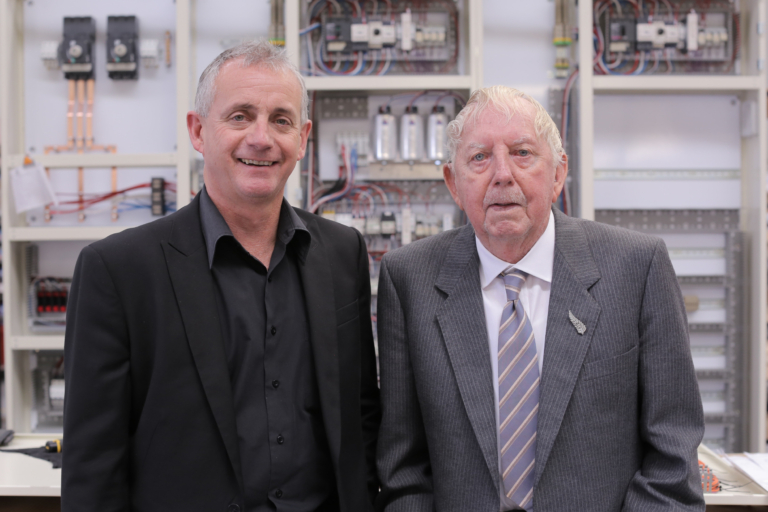
At home, Joe and Jackie raised four children, including their son Lindsay, who would eventually become Managing Director of McKay. Joe had tried for years to steer Lindsay towards the trade but was still surprised when his son finally announced that he wanted to become an electrician. Lindsay later worked in the United Kingdom petrochemical industry before returning to New Zealand to continue the family legacy.
In his later years, Joe enjoyed simple pleasures – spending time at the family bach in Oakura, fishing, boating, and sharing stories. He was known for his ‘stomach of steel’ and his dry sense of humour, and although he officially stepped back from daily management, he never truly retired.
Joe Faithfull passed away in 2015 at the age of 86, with Jackie by his side. He left behind a proud family of children, grandchildren, and great-grandchildren, and a company that had grown from a small-town electrical shop into a multinational business. More than anything, he left a legacy built on hard work, innovation, and quiet determination – summed up in the principle he lived by and passed on to generations:
“The harder you work, the more luck will come your way.”