
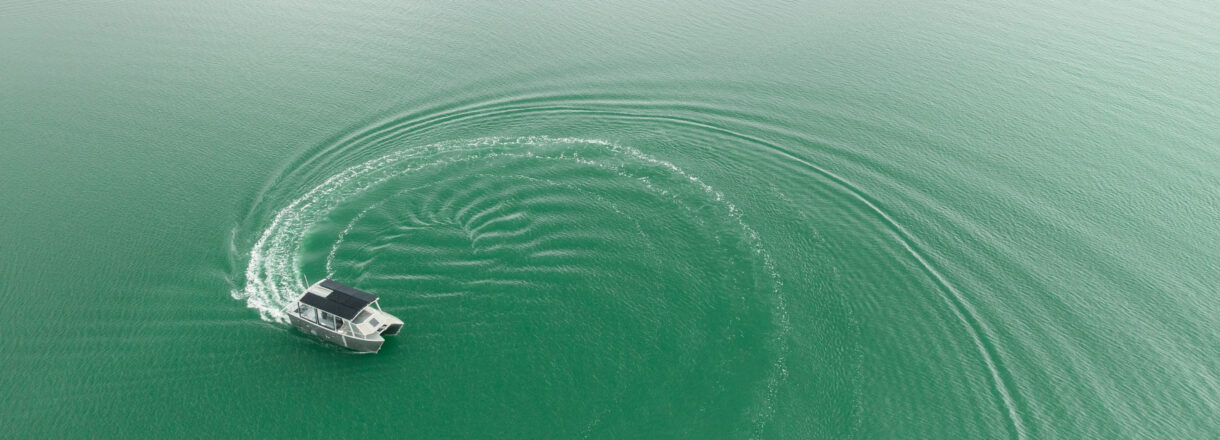
Recognising the importance of reliable inter-island transport to Samoa’s social and economic wellbeing, the project introduced a fleet of solar-powered, battery-electric passenger vessels designed specifically for Pacific operating conditions. McKay was appointed as the lead delivery partner, responsible for the design, manufacture, commissioning, and support of five electric catamarans operating between the islands of Manono, Namu’a, and Upolu.
Developed in partnership with Circa Marine Ltd and LOMOcean Design Ltd, the 10-metre aluminium vessels combine solar charging capability with battery-electric propulsion to deliver quiet, low-emission transport with reduced operating costs and improved passenger comfort. Designed to operate entirely without diesel propulsion, the vessels provide a practical demonstration of renewable energy integration within the Pacific maritime sector.
The project also placed a strong emphasis on local capability development and long-term sustainability. While the first vessel was constructed and trialled in Whangārei, the remaining vessels were assembled in Samoa in partnership with local shipbuilders and tradespeople, supported by McKay personnel who provided technical training, commissioning assistance, and operational guidance. Successful sea trials completed in 2025 validated the vessel design and confirmed the viability of electric marine transport within Pacific island environments.
The official handover of the completed fleet marked the successful delivery of Samoa’s first low-carbon maritime transport solution and established a new benchmark for renewable marine infrastructure across the Pacific. For McKay, Project E-Alia reflects the company’s continued leadership in marine electrification and its long-standing commitment to delivering innovative, community-focused infrastructure solutions throughout the region.