
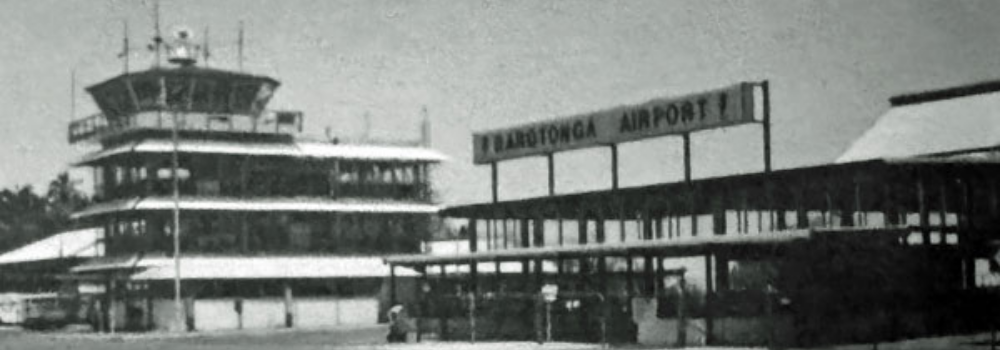
Recognising the strategic importance of air connectivity, the New Zealand Government funded a major expansion programme to extend and strengthen the runway, enabling the airport to accommodate long-haul jet operations and ushering in a new era of accessibility for the islands.
The primary driver for the upgrade was the need to support direct jet services, including Boeing 707 flights from Auckland. This capability dramatically reduced travel times, improved reliability, and positioned Rarotonga as a viable international destination. The investment not only enhanced aviation safety and operational capacity but also played a critical role in stimulating the Cook Islands’ tourism industry, strengthening economic links with New Zealand and the wider Pacific region.
For McKay, the Rarotonga International Airport upgrade represented a significant milestone as the company’s first overseas project. Building on experience gained at Queenstown and Te Anau airports while operating in the South Island during the aluminium smelter project, McKay was engaged to deliver a comprehensive scope of high-voltage, low-voltage, and airfield electrical work. Although the work was technically well within the company’s capabilities, the project presented the added complexity of operating in an overseas environment for the first time.
McKay’s scope included the supply, installation, and termination of an 11kV power supply system incorporating three power centres. This encompassed the installation, testing, and commissioning of all 11kV switchgear and transformers, as well as the complete 400V distribution system, including switchgear and cabling. To ensure operational resilience, McKay also supplied, installed, tested, and commissioned two 150kVA standby diesel alternators, together with all associated control equipment.
Airfield lighting formed a critical component of the project. McKay completed the full installation of lighting for the new 8,000-foot runway, including 200 runway edge and taxiway lights, 161 runway centreline lights, and a T-VASIS system to support safe aircraft approach and landing. In addition, the project included the supply and installation of 55 streetlights along approach roads and throughout car park areas, improving safety and accessibility across the airport precinct.
The work extended to the complete electrical installation of all air facility buildings and a new hangar complex, supporting both operational and maintenance requirements. Across the site, approximately 150,000 metres of underground cabling of various sizes was installed, reflecting the scale and complexity of the electrical network. Careful coordination was required to schedule equipment delivery and ensure that all installations were completed in parallel with the overall construction programme, allowing the airport upgrade to be commissioned as a fully integrated facility.
As part of the project deliverables, McKay supplied complete sets of computer-aided drawings covering all installed plant and equipment, providing a comprehensive and enduring record for future operation and maintenance. Delivered over several years by teams deployed to Rarotonga, including Graeme Clarke and Noel Driver, the project not only established McKay’s overseas capability but also laid the groundwork for many future projects across the Pacific Islands.
The Rarotonga International Airport upgrade remains a landmark achievement, both in creating a modern international gateway for the Cook Islands and in marking the beginning of McKay’s long-standing involvement in delivering complex electrical infrastructure projects beyond New Zealand’s shores.