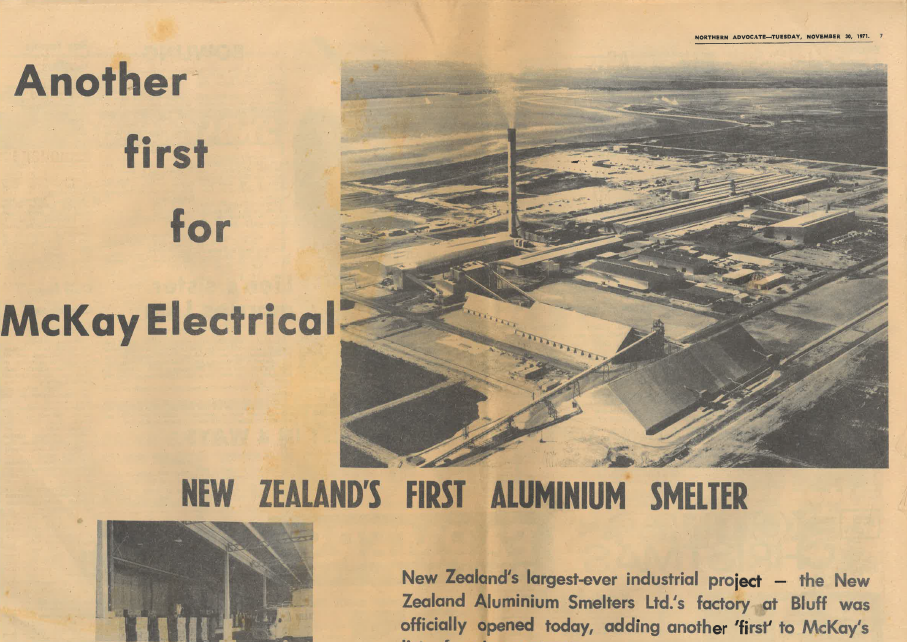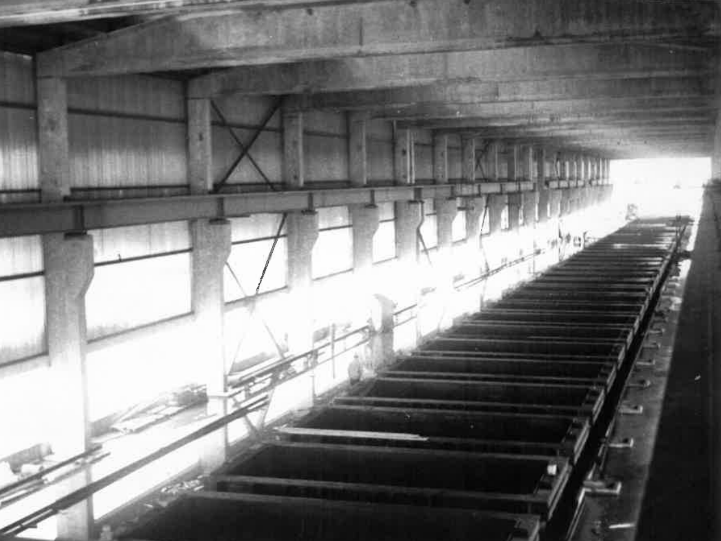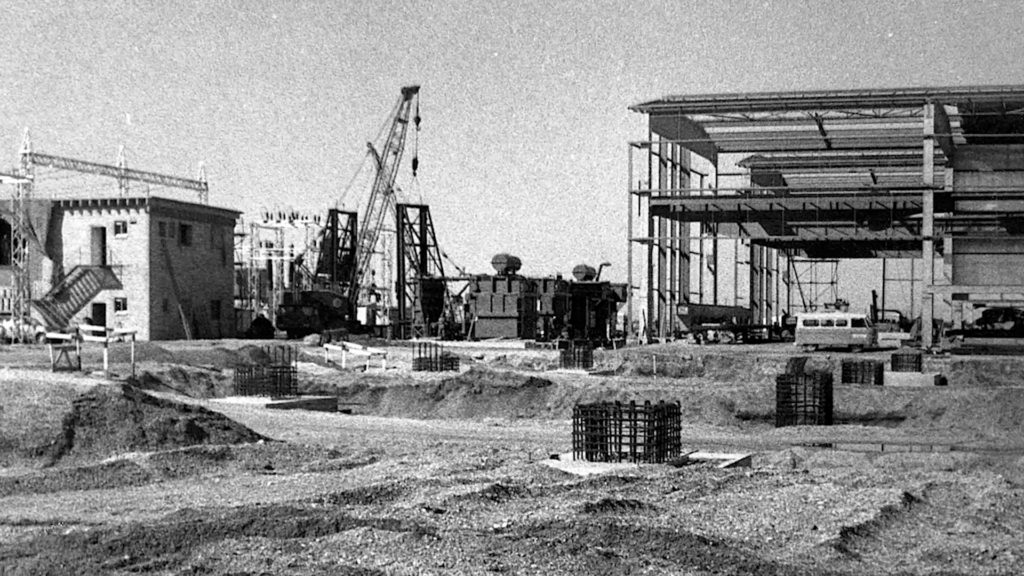
For McKay, the project marked the company’s first major venture into the South Island and a decisive step into heavy industrial electrical work. After seeing the ‘aluminium money’ advertisement produced by Jack Penny Advertising Limited calling for skilled workers, Joe Faithfull and Tom McKay travelled to Australia to visit an operational aluminium smelter. This first-hand exposure provided critical insight into the scale, complexity, and specialised electrical systems required, ensuring that McKay entered the project with a clear understanding of the demands ahead.
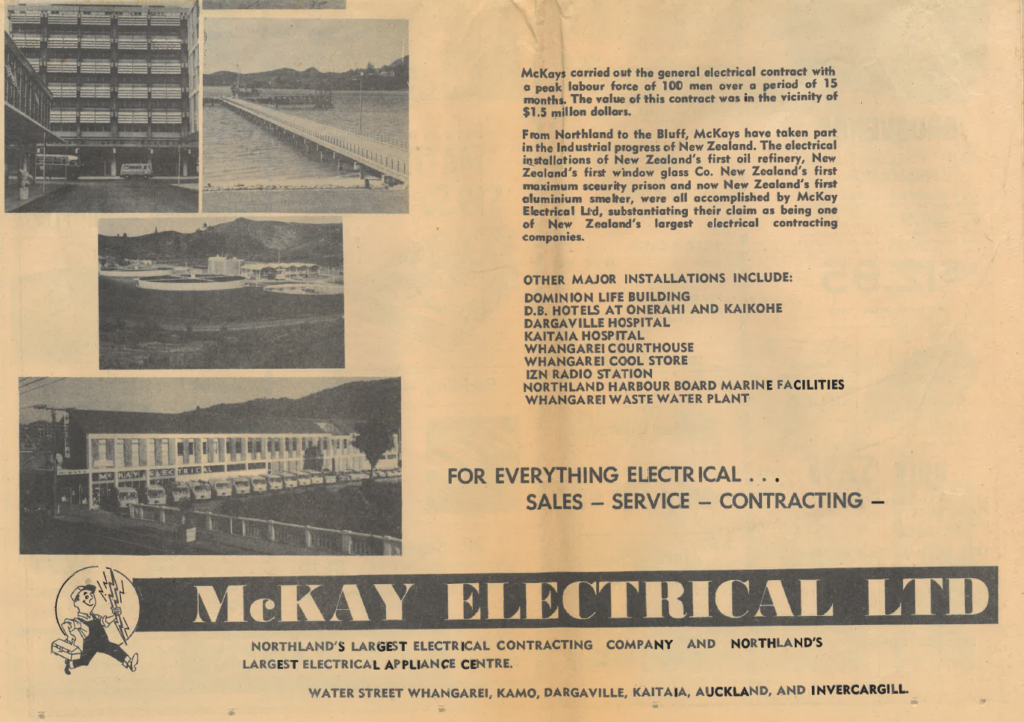
As construction progressed, McKay’s on-site presence expanded significantly. At the peak of activity, McKay was managing approximately 100 staff and delivering complex electrical installations critical to the operation of the smelter.
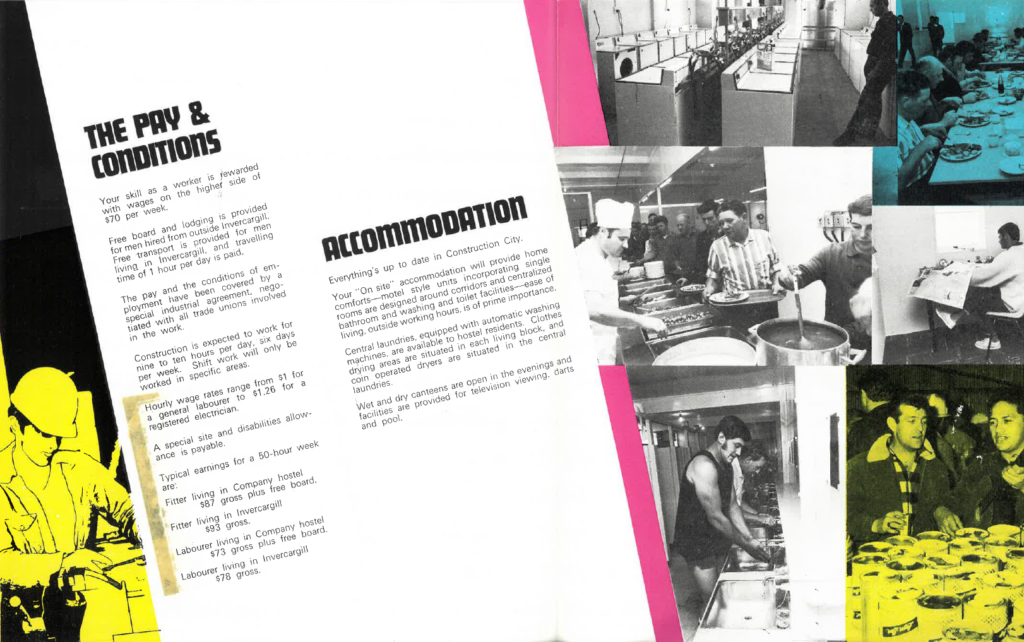
The working conditions at Tīwai Point reflected the intensity and ambition of the project. Workers were expected to commit to long hours, typically nine to ten hours per day, six days per week, with shift work available only in specific areas of the site. Hourly wage rates for registered electricians ranged from $1 to $1.26, reflecting both the specialised skills required and the challenging nature of the work in a remote, heavy industrial environment.
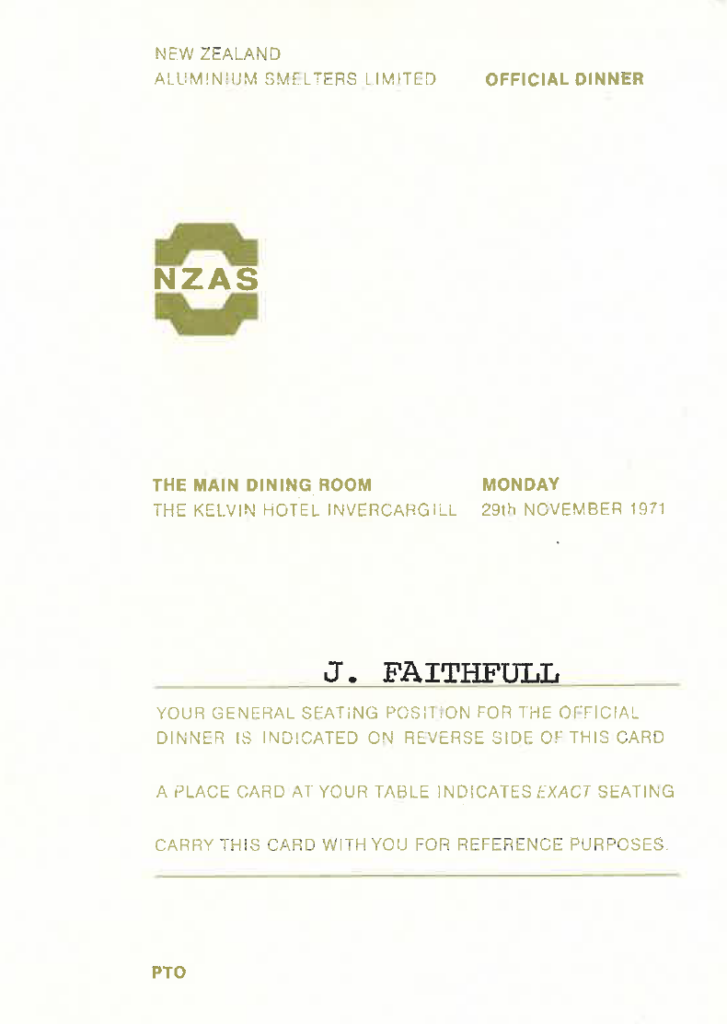
The official opening of the Tīwai Point Aluminium Smelter on 20 November 1971 was attended by Joe Faithfull, marking the successful completion of a nationally significant project and a proud moment for McKay. The company’s performance at Tīwai Point reinforced its reputation for reliability and technical capability, while establishing a strong foundation for future operations in the South Island.
Tīwai Point remains a landmark in McKay’s history, demonstrating the company’s willingness to prepare thoroughly and deliver at scale. The experience gained on the smelter helped shape the McKay’s approach to major projects, influencing its growth and direction in the decades that followed.