Marine electrification is still widely regarded as an emerging field, with widespread adoption only now beginning to accelerate. Yet, long before global momentum began to build – and well before operators, regulators, or shipyards were seriously considering electric propulsion – McKay was already quietly leading the charge, transforming early ambition into real-world, low-emission vessels.
McKay’s willingness to move early lies at the heart of its innovation. At a time when electrification was little more than a theoretical discussion within the marine industry, McKay recognised that the sector would inevitably face the same pressures as land-based transport: the need to reduce emissions, improve energy efficiency, and adopt cleaner technologies.
Rather than waiting for demand to emerge, McKay invested in marine electrification years ahead of the curve, developing specialist expertise long before the wider market caught up. By the time global interest in hybrid and electric vessels began to accelerate, McKay was already actively delivering projects in the field.
While many New Zealand competitors were only beginning to explore electrical integration, McKay had already delivered hybrid and fully electric systems for vessels in both the United States and New Zealand. This included contributing to the United States’ first hybrid-electric research vessel in 2015 and, later, supporting the Southern Hemisphere’s first fully electric passenger ferry.
By committing to electrification well before widespread adoption, McKay has been able to experiment with, refine, and perfect systems in real-world operating conditions, building a depth of capability that competitors are only now beginning to develop. This foresight demonstrates that McKay’s innovation is driven not only by engineering expertise but also by vision, timing, and a willingness to lead.
Today, as marine electrification accelerates globally, McKay’s long-established capability positions the company to lead rather than follow – delivering practical, high-performance solutions shaped by years of hands-on experience.
Looking ahead, McKay will continue helping operators, governments, and communities transition towards cleaner and more sustainable maritime transport, setting the standard for environmentally responsible marine solutions.
ELECTRIFICATION PROJECT TIMELINE
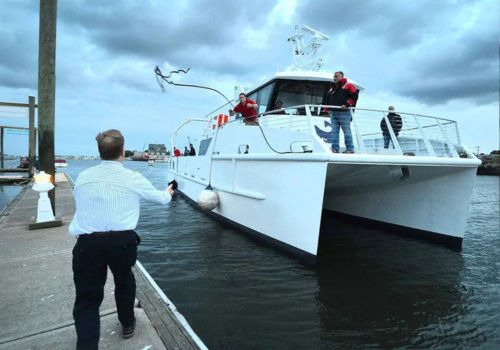
2015
RV Spirit of the Sound
United States
RV Spirit of the Sound was the first hybrid-electric research vessel in the United States and was based at The Maritime Aquarium in Norwalk, CT.
2017
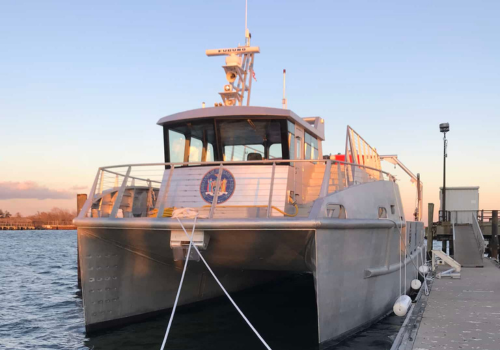
RV CUNY
United States
RV CUNY I is a state-of-the-art, 65ft hybrid-propulsion, aluminium catamaran based at Kingsborough Community College in Manhattan Beach, Brooklyn.
2021
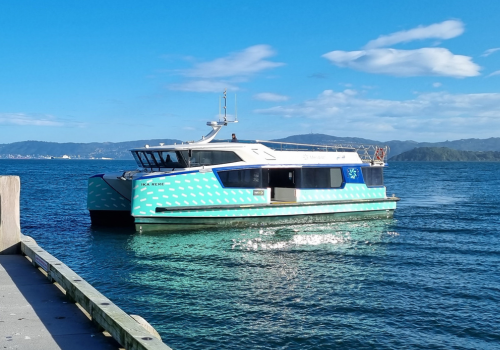
Ika Rere
Wellington, New Zealand
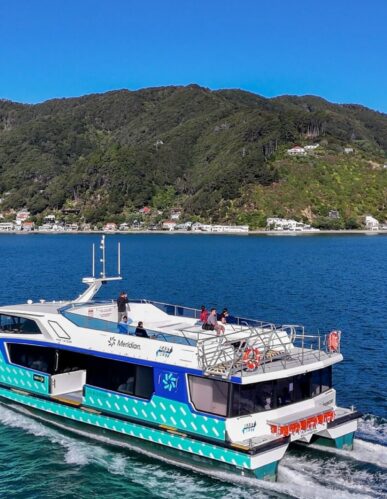
New Zealand’s first fully electric, high-performance passenger ferry, serving Wellington Harbour. The 19-metre carbon-fibre catamaran can carry up to 132 passengers at a speed of 20 knots, and is powered entirely by renewable energy.
2022
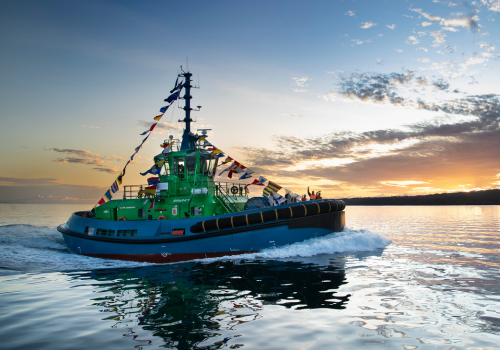
Sparky, e-tug
Auckland, New Zealand
Sparky is the world’s first full-size, fully electric ship-handling tugboat. It is 25 metres long, with a 2.8MW battery system and 70-ton bollard pull. Sparky is based in the Port of Auckland in New Zealand.
2022
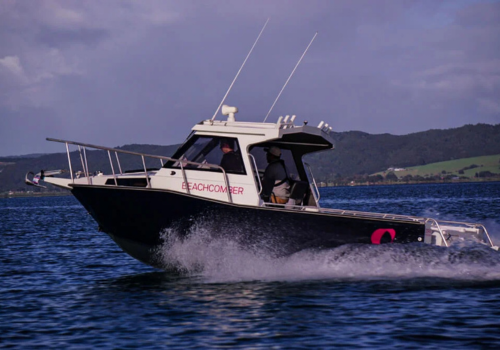
Beachcomber electric inboard retrofit
Whangārei, New Zealand
Developed by Naut, a company associated with McKay, Beachcomber was Naut’s first proof of concept vessel. The sterndrive vessel was retrofitted with an electric inboard system.
2023
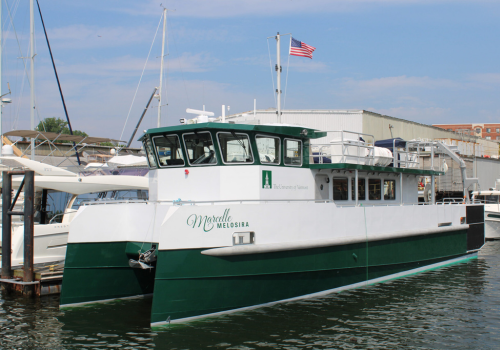
RV Marcelle Melosira
United States
RV Marcelle Melosira is a 19-metre (64 ft) hybrid-electric research catamaran based in Mamaroneck, New York.
2025
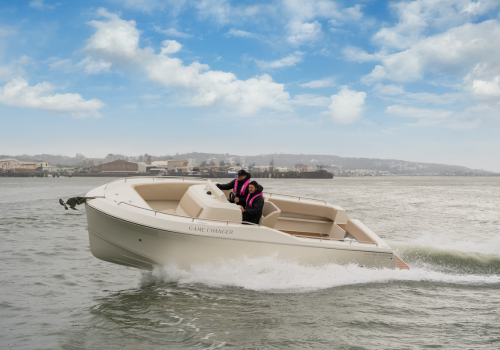
Game Changer
United States
Naut designed and built Game Changer, a custom, fully electric, 300HP recreational trailerable showboat capable of cruising from 20 to 50 knots.
2025
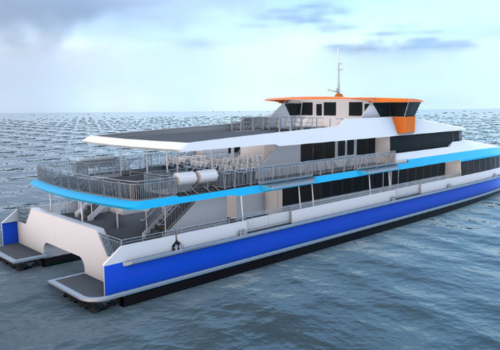
Liwa Class ferry programme
United States
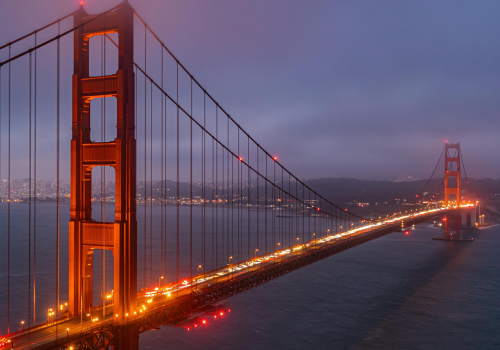
McKay was appointed by Aurora Marine Design Limited to serve as the electrical systems integrator for Golden Gate Ferries’ Liwa Class programme in San Francisco. The programme included eight 50.5-metre 500-passenger hybrid ferries.
2025
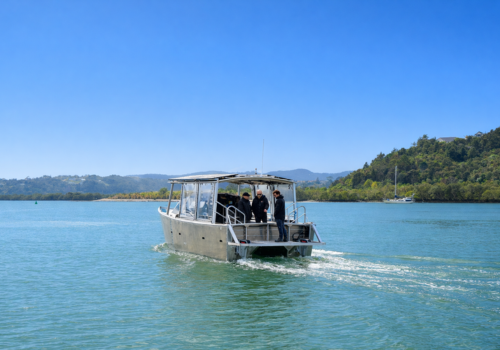
E-Alia
Samoa
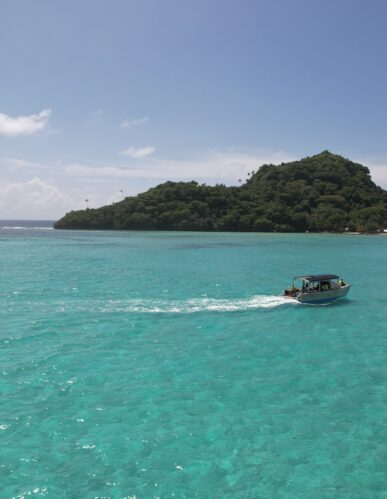
McKay was appointed as the head supplier for the E-Alia project, which formed part of the Climate Action Pathways for Island Transport (CAP-IT) Project. McKay delivered five solar- and battery-powered electric catamarans for the project.
2026
Electric ferries
United States
McKay is in the final stages of negotiations to deliver two fully electric passenger ferries in the United States.