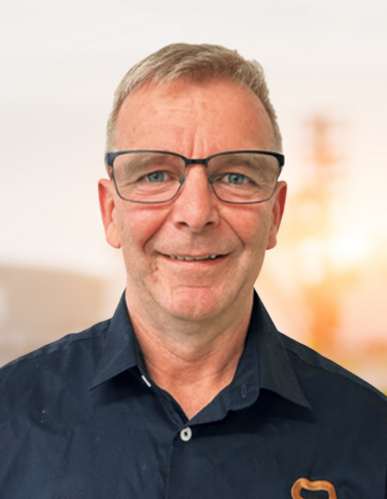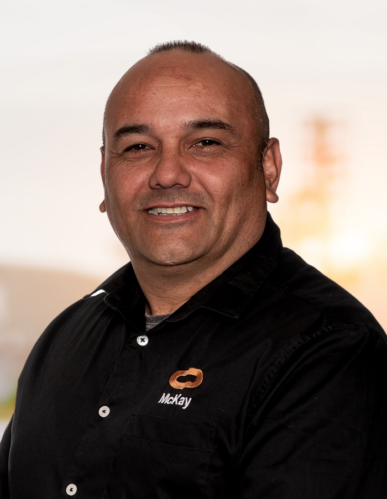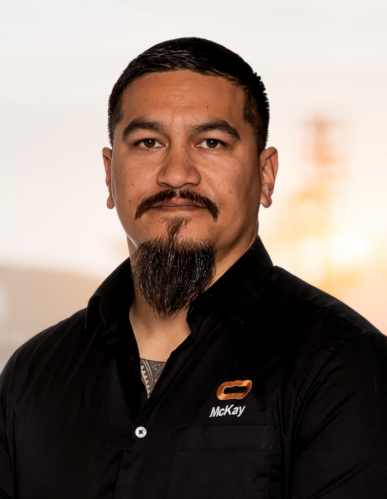
BAY OF PLENTY REGION
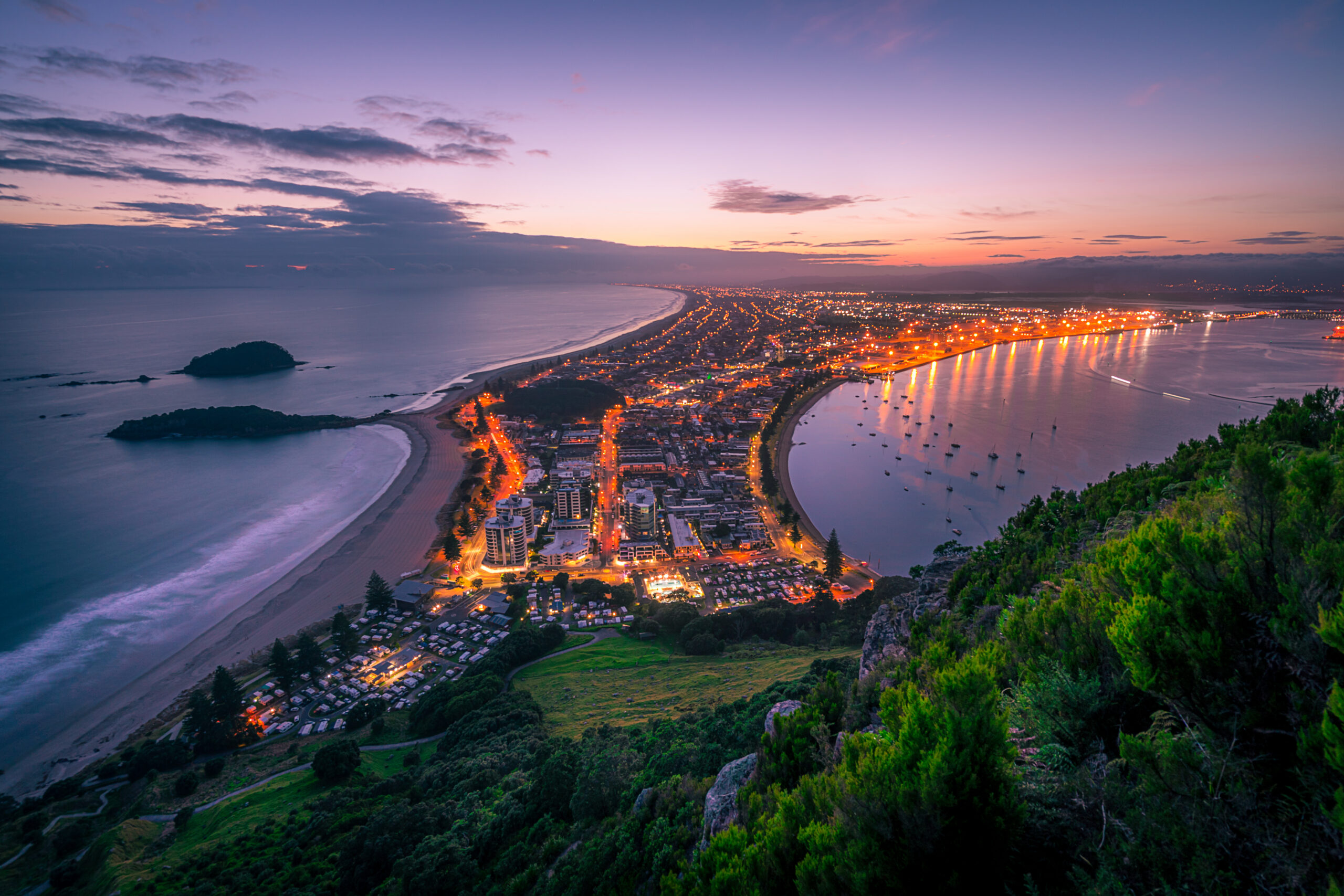
The Bay of Plenty stands out as one of McKay’s most compelling growth stories – remarkable not only for its scale but for how quickly it has unfolded. The region began with the establishment of the Kawerau branch in 2015, expanded into Rotorua in 2019, and most recently into Tauranga in 2023. In just over a decade, it has evolved from a small industrial outpost into a diverse, 130-strong regional operation playing a major role in McKay’s national success.
Regional Manager Ross Rowe has witnessed that journey from the very beginning. When the region was first established, McKay absorbed the operations of Tenix, a mechanical and electrical firm that had been active locally for less than two years. While there were no major operational hurdles, Ross remembers the adjustment period that came with adopting new systems, processes, and the McKay brand – one that was well known in Northland but unfamiliar in the Bay of Plenty.
The early days relied heavily on the reputation and relationships of the staff themselves. Customers followed, employees transitioned across, and the region began to stabilise. “We had to show people things would improve under the McKay banner,” Ross recalls. “We did not want them to go off to another local contractor.” The market at the time was steady, dominated by pulp and paper work, and the team comprised just five or six electricians.
Several turning points transformed that modest branch into a major regional player. One of the first significant projects was a drive upgrade delivered soon after McKay sold its mechanical arm – an early test of the team’s ability to take on large industrial work. But the biggest shift came with the Rotorua streetlighting contract. When a local competitor went into receivership, McKay stepped in, taking on several of its employees and its building lease. Within two weeks, the Tauranga streetlighting contract was also awarded to McKay. Practically overnight, the region doubled in size and began operating at a scale it had never experienced before.
Another key moment was the region’s return to geothermal construction. Staff in Kawerau and Rotorua had long histories in the sector. As new geothermal projects resumed after a long pause, McKay was well positioned to re-enter the market in the early 2020s. “Te Huka was the first step back into it,” Ross says.
More recently, diversification has driven rapid growth, particularly in the water sector across Tauranga. This expansion has brought new relationships with Tier 1 contractors and direct council work, broadening the region’s capabilities well beyond its industrial roots.
Throughout all this, Ross is most proud of the team’s consistency and stability. “In 12 or 13 years, we’ve performed year in, year out,” he says. “We’ve never had to downsize; we’ve continued to grow.” The development of new roles, such as a dedicated Regional Business Manager position held by Elisabeth Smith, reflects the growing complexity and scale of the operation.
Culturally, the region remains closely aligned with McKay’s values, though adapted to its unique environment. With many staff working in the field rather than the office, loyalty to one another and strong team relationships have become defining features. Ross credits his managers with cultivating teams that remain tight-knit even as the region expands.
Adapting to change has not been without its challenges. Customer expectations around health and safety have risen sharply, industrial relations have evolved, and global supply chain disruptions following COVID-19 continue to create pressure. Ross’s leadership approach has focused on empowering managers with autonomy. “We set expectations for outcomes rather than prescribing how things must be done,” he explains. “As long as they work within the McKay system, they have the latitude to run the business.”
Today, the Bay of Plenty region contributes significantly to McKay’s national performance. “We’re a huge part of McKay’s ability to grow,” Ross says. “We’re diversified, consistent, and we get things done.”
As for legacy, Ross’s ambitions are centred on people. “I want to leave the region with secure futures – a strong base of regular work and relationships. I want people to feel confident in their future with McKay.” Opportunities on the horizon include a push into the mining sector, with potential work for OceanaGold and several other projects in development. Longer term, Ross envisions the region following a path similar to Northland’s – broadening its service lines and potentially expanding into areas such as Hawke’s Bay.
Looking ahead to the next ten years, Ross sees a region that is even more diverse, capable, and confident. “There’s a lot of opportunity ahead,” he says. “And we’ve got people who consistently go above and beyond. Growing that team and giving them opportunities – that’s what excites me.”
From a small team in Kawerau to a major regional force, the story of the past decade is one of growth built on relationships, resilience, and belief in what’s possible.